















A sharp 65% drop in Fortune 500 companies publicly communicating diversity, equity and inclusion (DEI) commitments has coincided with rising reports of stigma, job insecurity and declining productivity among LGBTQ+ workers, according to new research.
Additionally, more than half of employees at companies scaling back diversity efforts report stigma or bias, reveals the latest report from the Human Rights Campaign (HRC) Foundation, highlighting rising workplace strain amid political pressure.
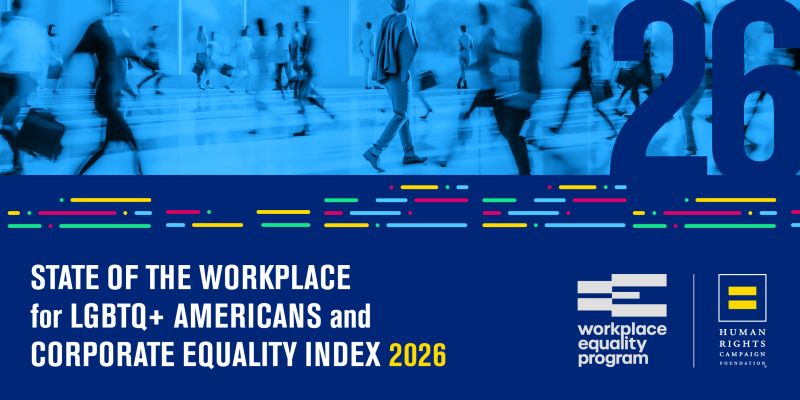
The findings, from HRC’s 2026 State of the Workplace for LGBTQ+ Americans and Corporate Equality Index (CEI), paint a complex picture. While many companies are quietly maintaining inclusive policies, fewer are publicly documenting them, creating uncertainty that researchers warn could become a future liability for businesses.
SCALED BACK DEI EFFORTS
The research found that 54.2% of workers at organisations that scaled back DEI efforts reported experiencing stigma or bias in the past year, more than double the rate among employees at companies that maintained inclusion practices. Hostile work environments also correlated strongly with retention and performance risks. In fact, 86% of workers who described their workplace as hostile said they were considering leaving. Additionally, nearly half of LGBTQ+ employees at risk of departure reported declining productivity.
Kelley Robinson, President of the Human Rights Campaign, said the data revealed “the strength and the strain of this moment” for both workers and employers. “It remains unconstitutional to discriminate against LGBTQ+ workers,” she said, referencing the Supreme Court’s Bostock v. Clayton County decision. “But LGBTQ+ workers are experiencing increased hostility in companies that abandon commitments to diversity and inclusion – commitments that are lawful and a benefit to the bottom line.”
IMPACT OF POLITICAL DEI SCRUTINY
The latest report arrives amid heightened political scrutiny of DEI initiatives across the US. Federal administrative actions and diverging state policies have introduced new uncertainty for businesses, prompting some to rebrand or reduce longstanding programmes while leaving core workplace protections technically intact.
According to HRC’s research, nearly 40% of US workers said their employer reduced, rebranded or eliminated at least one DEI-related practice in the past year, often without clearly communicating how employees would be affected. Researchers say that lack of clarity – rather than policy change alone – is contributing to rising anxiety among LGBTQ+ workers, particularly transgender and gender-expansive employees concerned about career progression and safety at work.
Robinson described corporate silence as consequential. “When companies pull back from clarity, workers feel it immediately,” she said. “Silence is rarely experienced as neutrality.”
RETREAT FROM PUBLIC COMMITMENTS
Fewer employers chose to publicly document their practices through CEI submissions in 2026 – a 65% decline among Fortune 500 companies, from 377 participants in 2025 to 131 this year, which many observers attribute to increased political pressure, particularly on companies with federal contracts. At the same time, 534 companies earned a score of 100 and will be recognised with the HRC Foundation’s Equality 100 Award as Leaders in LGBTQ+ Workplace Inclusion, collectively representing nearly 6 million US employees.
Despite fewer submissions, year-over-year analysis found no decline in the implementation of inclusive policies and practices among participating companies. In many cases, the research suggests, businesses are maintaining internal policies while retreating from public commitments.
RaShawn Hawkins, Senior Director of Workplace Equality at the HRC Foundation, said the Index remains a crucial benchmark for HR leaders navigating uncertainty. “Employees are looking for signals they can trust,” Hawkins said. “Clear communication helps build workplace culture, strengthen trust and compete for talent.”
PROFIT & PRODUCTIVITY LINK
Beyond employee wellbeing, the research highlights financial stakes for companies. Analysis of CEI data over fifteen years found that companies with leading LGBTQ+-inclusive policies reported average net income more than eight times higher than their peers, along with stronger revenue growth and stock price stability.
The link between workplace climate and productivity is also significant. Nearly half of LGBTQ+ workers considering leaving their jobs reported reduced productivity – a trend that can ripple across teams and affect long-term business resilience, noted the report.
Robinson pointed to generational and market pressures that may continue to influence corporate decisions. Nearly 30% of Gen Z identify as LGBTQ+, she said, and the community represents an estimated $1.4 trillion in buying power. Shareholders, too, have largely rejected anti-DEI proposals in recent votes, she noted.
TRANSPARENCY CHALLENGE
The combined report argues that transparency – not just policy – has emerged as the defining challenge for companies navigating the current environment. Employees, jobseekers and investors increasingly expect clear signals about workplace values and protections, researchers say.
“Leadership is rarely easy,” Robinson said. “But difficulty has never been an excuse to abandon workers or ignore shareholders.”
As companies weigh legal risk, political pressure and workforce expectations, the research suggests the consequences of silence may be significant. Workers unsure about their employer’s stance are more likely to perceive hostility, consider leaving and disengage – outcomes that researchers say can ultimately undermine organisational performance.
The report concludes that inclusive policies remain widespread even as public communication declines, leaving businesses at a crossroads. Transparency, it argues, is no longer optional but central to trust, talent retention and long-term resilience – a message likely to resonate as corporate America continues to navigate a volatile political and economic landscape.
INCLUSION & TRANSPARENCY: TIPS FOR EMPLOYERS
Workers who lack clarity about their employer’s inclusion commitments are more likely to perceive hostility, disengage and consider leaving, with real consequences for productivity and organisational performance. So how can employers be more transparent and inclusive to retain trust among diverse and LGBTQ+ workers?
Openly communicating commitments, reporting progress and embedding inclusion into everyday operations not only support LGBTQ+ employees but also strengthen talent retention, innovation and long-term resilience in a volatile corporate landscape.
HRC’s 2026 State of the Workplace and Corporate Equality Index (CEI) show that while many companies continue internal inclusion policies, public communication about these commitments has declined sharply. This loss of visibility matters: employees at organisations that reduce transparent messaging are more likely to report stigma or bias, perceive their workplaces as hostile and show higher intent to leave alongside lower productivity.
To build trust, attract and retain diverse LGBTQ+ talent and protect organisational performance, employers must move beyond policies on paper. Clear communication, consistent action and genuinely inclusive environments are essential. Here are some practical steps employers can take:
1. Publicly communicate your values and policies
Why it matters: Visibility signals commitment. As RaShawn Hawkins of the HRC Foundation notes, employees are looking for signals they can trust – and silence is often interpreted as withdrawal of support.
Recommendations:
- Publish a clear, up-to-date diversity and inclusion statement that explicitly references sexual orientation and gender identity.
- Share policy updates internally and externally so both current employees and jobseekers know what protections and benefits exist.
- Discuss inclusion goals and DEI strategy in public reports, careers pages, and recruitment materials.
2. Embed inclusive language and communication norms
Why it matters: The words organisations use – from HR policies to everyday communication – shape whether employees feel seen and respected.
Recommendations:
- Promote gender-neutral language across internal and external communications (e.g. “partner” instead of “husband/wife”).
- Encourage inclusion of pronouns in email signatures and employee directories.
- Train managers and teams on inclusive communication norms.
3. Encourage employee resource groups (ERGs) and ally networks
Why it matters: ERGs create a safe space for LGBTQ+ employees to connect, give feedback and help shape policy. They also signal that inclusion isn’t just a “box-ticking” exercise.
Recommendations:
- Support the formation of LGBTQ+ employee networks with dedicated time and budget.
- Bring allies into planning and advocacy efforts.
- Ensure leadership actively sponsors and participates in these groups.
4. Commit to accountability through transparency and reporting
Why it matters: Data on representation, pay equity, and leadership diversity builds trust – especially where political narratives question the value of inclusion work. Read more here on the importance of reporting LGBTQ+ pay gaps and representation in senior roles as a way to demonstrate real organisational commitment rather than superficial pledges.
Recommendations:
- Report on LGBTQ+ representation at senior levels and across teams.
- Conduct regular pay audits that include sexual orientation and gender identity metrics.
- Share goals, progress and areas for improvement publicly.
5. Provide ongoing education and safe reporting channels
Why it matters: Stigma or bias thrives in silence; education and secure mechanisms for reporting issues help create psychological safety.
Recommendations:
- Offer DEI training that includes LGBTQ+ experiences and allyship practices.
- Create robust, confidential reporting processes for discrimination or bias with clear follow-up.
- Equip managers to handle sensitive conversations with empathy and professionalism.
6. Celebrate and support LGBTQ+ identity year-round
Why it matters: Inclusion is not only about policies – it’s about culture. Visible affirmation matters for individuals’ sense of belonging. Authentic, year-round allyship and celebration contribute to real cultural change, beyond occasional gestures.
Recommendations:
- Mark major awareness days and months (e.g. Pride, Trans Day of Visibility) with company-wide communications and events.
- Listen to LGBTQ+ employees about which celebrations feel authentic and inclusive.
- Amplify voices from across the LGBTQ+ spectrum in internal and external storytelling.
7. Align leadership behaviour with policy
Why it matters: Workers gauge organisational commitment by what leaders do, not just what they say. Visible leadership engagement reinforces trust and organisational alignment.
Recommendations:
- Leaders should speak publicly about inclusion goals, setbacks and successes.
- Ensure DEI objectives are tied to performance evaluations at director and executive levels.
- Equip senior managers with tools to lead inclusive teams.
Click here to read the full 2026 HRC report.
RELATED ARTICLES
Federal rollbacks of DEI policies introduced earlier this year have sparked deep anxiety amongst women and minority civil servants.
Public disclosure of racial and ethnic composition on corporate boards has plummeted across the US amid legal and political pressure, reversing years of progress in transparency.
One in five companies have eliminated their DEI initiatives since 2024, sparking concern over inclusion and employee retention, reveals study.
A new study has confirmed that most US business and legal leaders believe scaling back DEI initiatives may increase corporate risk.
Sign up for our newsletter