











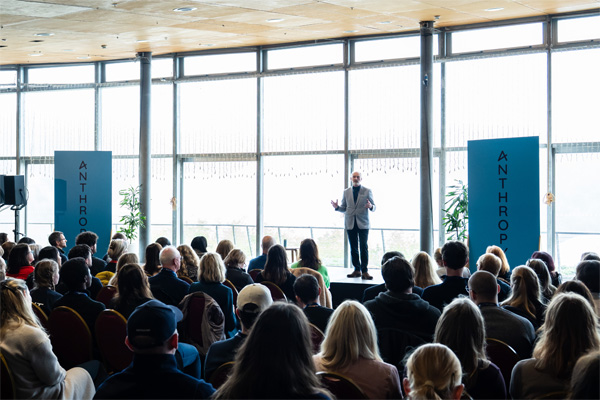
At Anthropy 2026, business leaders reflected on how to shape a fairer, more sustainable and more accountable future for the UK.
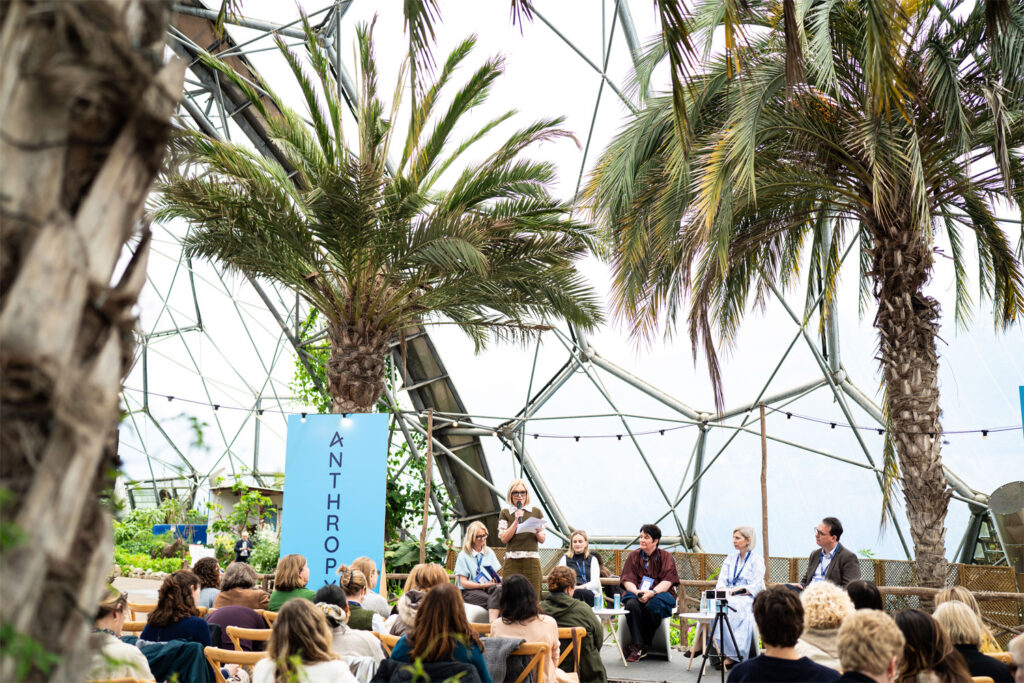
Each year, Anthropy at the Eden Project, brings together leaders from across business, government, education, the arts and civil society. But this is not a typical conference. It is described by its founder, John O’Brien, as a “thinking environment” – a space where leaders are encouraged not just to speak, but to reflect on the systems they shape and the responsibilities they hold.
Over three days, more than 2,200 participants and 1,200 organisations came together across 230 sessions and more than 600 speakers. Top speakers include national voices such as Lord Dr Michael Hastings CBE, Dame Melanie Dawes, Baroness Sharon White, Juergen Maier, Mariella Frostrup and Sir Loyd Grossman; leading CEOs such as Salesforce UK & Ireland’s Zahra Bahrololoumi, Ipsos’ Kelly Beaver, Dentsu’s Annette Male, ITN’s Rachel Corp and James Ainscough OBE; and purpose-driven entrepreneurs such as Gravitas Industries’ Richard Browning, Emma Bridgewater, Eden Project’s Sir Tim Smit KBE and Piers Linney MBE.
Yet what stood out was not scale, but intent: a growing recognition that the role of business is evolving – from economic actor to societal steward. At Anthropy 2026, responsible business was not a side conversation. It was the thread connecting discussions on trust, climate, AI, inequality and long-term prosperity.
FROM PERFORMANCE TO RESPONSIBILITY
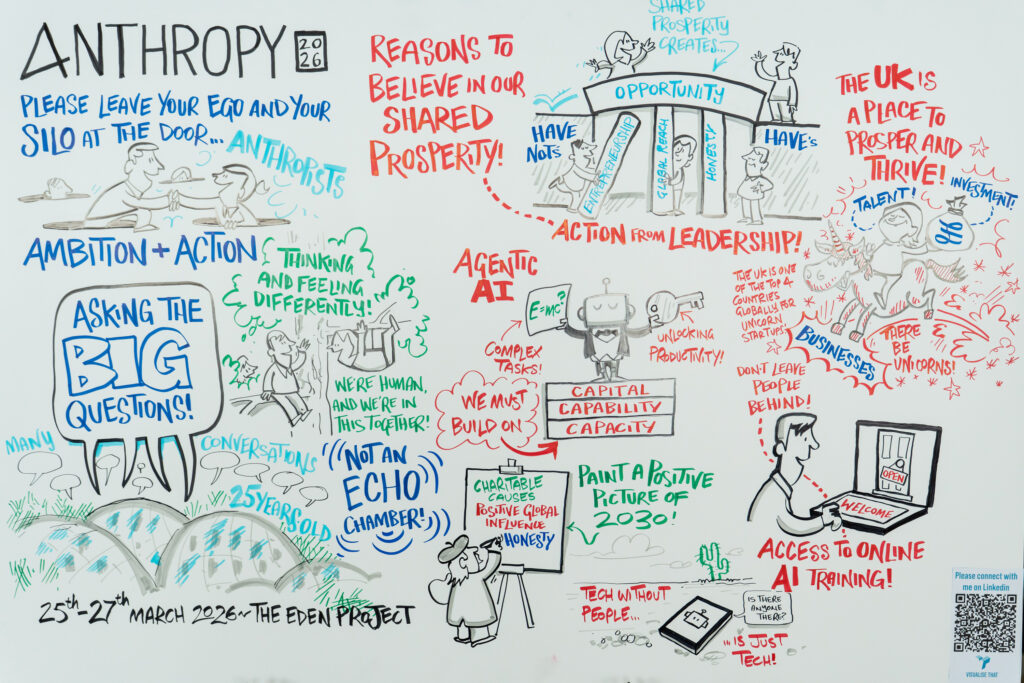
A defining shift in 2026 was the move away from leadership as performance towards leadership as responsibility. Dialogue replaced presentations. Reflection replaced rhetoric. The concept of “keynote listeners” – not speakers – reflected a deeper shift: that responsible leadership begins with understanding, not asserting.
This shift was reflected across sessions featuring leaders from finance, media, sustainability and policy – from Paul Drechsler and Will Hutton to Kamal Ahmed – all grappling with how institutions must adapt to meet long-term societal expectations.
RESPONSIBLE LEADERSHIP
In a world where trust is fragile and expectations are rising, leaders are increasingly expected to engage with perspectives beyond their own organisations. This includes engaging with employees, communities, policymakers and future generations. Anthropy successfully achieves this each year, by creating a space where vital conversations can happen and collective insight can drive meaningful change.
As Zahra Bahrololoumi, CEO of Salesforce UK & Ireland, noted: “This isn’t like any other conference. You do genuinely meet people from all walks of life, and you can’t fail to be inspired on a daily basis. I get the opportunity to meet a range of people, all working with one goal, and that’s to build a positive future for the UK. That includes policymakers, government ministers, people from other sectors, business leaders, young people, students, teachers,” she shared. “And honestly it gives me so much more information, so much more input – A, to become a better leader, but B, to really help shape a future for the UK.
“Just the level of activity that is happening, the amount of inspirational activity – it makes me feel we’re in good hands. If I think about the emerging leaders and the young people that I’ve encountered here at Anthropy – they’re amazing. And we are in safe hands.”
COLLABORATION AS INFRASTRUCTURE
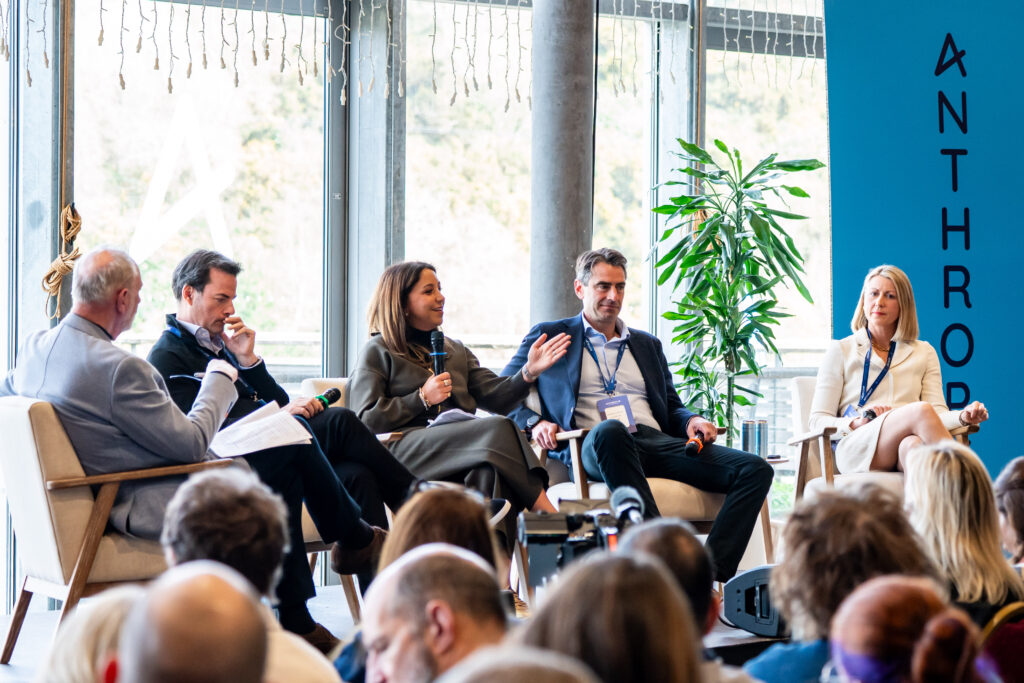
One of the clearest messages from Anthropy 2026 is that responsible business cannot operate in isolation. Progress depends on collaboration across business, government and civil society – not as a nice-to-have, but as essential infrastructure. This was reflected not just in discussions, but in the diversity of voices present. This included environmental leaders like Tony Juniper and Tim Christophersen, to social impact advocates such as Dame Julia Cleverdon, and cultural voices including William Sieghart.
For Harbi Jama, Director of Philanthropy and Partnerships at Impetus, this collaboration is critical. “What inspired me most was being in a space with so many people who are genuinely driving change, or enabling it, and having the time to properly connect over three days. You don’t often get that in the UK,” noted Jama. “It wasn’t just about ideas – it was about relationships: people challenging each other, sharing openly, and thinking about how to actually move things forward together. For me, it reinforced that real change happens through people and partnerships, not just strategy.”
He also pointed to a gap many organisations still face: “Back the people who are already doing the work. We don’t need more pilots or more theory, we need to invest in the organisations and leaders who are delivering impact and give them the time and trust to scale. That means being more decisive, more collaborative and more willing to commit for the long term.
“We need to get more comfortable with organisations working together, and in some cases merging, where they’re ultimately aiming for the same outcomes. The sector is often too fragmented. And if we’re serious about impact at scale, we have to think more collectively about how we use our resources and capabilities.”
TRUST & TRANSPARENCY: RESPONSIBLE BUSINESS CHALLENGE
Trust is becoming one of the defining challenges for responsible business. Consumers, employees and stakeholders increasingly expect transparency, accountability and proof – not just promises.
Charlie Martin, CEO of the Anti-Greenwash Charter, highlighted the increasing importance of this: “I spent most of my time in sessions focused on trust, truth and transparency. And my biggest takeaway was how fragile and complex trust has become. There is a clear sense that truth itself is under pressure, while expectations from stakeholders continue to rise.”
The implication for business is clear: “What stood out was not just the scale of the challenge, but the opportunity it creates. There is a real appetite for moving beyond better storytelling towards more robust, technology-enabled systems that make claims easier to evidence and harder to distort. That feels like a meaningful shift – and a necessary one,” shared Martin. “Recognise that trust cannot be managed through messaging alone. It needs to be built into the systems behind what you say. That means creating structures where claims are consistently evidenced, where transparency is automated, and where scrutiny is welcomed rather than avoided.”
Martin believes that the organisations that will stand out are not those with the most compelling narratives, but those that make “truth easier to see and verify”. “In the current environment, that shift from narrative to evidence is where real credibility will be built.”
OPPORTUNITY & FAIRNESS AT WORK
The future of work – particularly in the context of AI – raises fundamental questions about the role of business in shaping opportunity and fairness – for all ages from Gen X to Gen Z, including the Boomers and incoming Gen Alpha from 2030.
As Lyndsey Simpson, Founder and CEO of 55/Redefined Group, highlighted: “If you don’t have an age strategy, you don’t have a growth strategy. We are redefining the future of work for the 100-year life, and the companies that grow in the next decade will be those that join us in that mission.”
Charlotte Sweeney OBE, Founder and CEO, Charlotte Sweeney Associates, noted that, although commitment to creating diverse and inclusive workplaces seems to have waned, “if you read the press, inspirational leaders continue to talk about the importance of creating workplaces that work for all, removing barriers and instilling fairness.”
Her advice to leaders is clear: “With the adoption of AI and ongoing considerations about the future of work – what it will look like and what it will mean – creating workplaces that work for everyone is more important than ever. My advice is to focus on what’s right for your business, in the short and longer term. Even if it seems to go against popular external views, do what is right for your business.”
HUMANISM IN THE AI AGE
Jenny Garrett, CEO of Jenny Garrett Global, highlighted the risks of inaction. “The moment that stopped me came during the Humanism in the AI Age session – a simple but devastating observation that social mobility as we’ve known it may be over. Not because people lack drive or talent, but because AI is eliminating the entry-level roles that have always been the first rung of the ladder,” she noted.
“Junior lawyers, graduate analysts, entry-level knowledge workers – those roles are disappearing. And if you can’t get on the ladder, you can’t climb it. We talk about the two-tier workforce as a future risk. Anthropy reminded me it’s forming right now. And that the decisions leaders make in the next two to three years will determine whether AI becomes a tool for greater equity or the most efficient inequality engine we’ve ever built.”
Her message emphasises a core principle of responsible business: “Silence is a choice, and in 2026, it’s the wrong one. Purpose and values mean nothing if they only show up when it’s easy. Your people are not watching your strategy documents. They’re watching what you do when it’s uncomfortable.
“The leaders who will navigate this era well aren’t necessarily the ones with the best AI roadmap. They’re the ones their people trust when things get hard. And that trust is built – or lost – in the moments you choose not to stay quiet.”
SUSTAINABILITY AS A BUSINESS IMPERATIVE
Sustainability is no longer a peripheral concern. It is central to long-term business viability. Andy Brown, who supports boards, chairs, CEOs and executives embedding sustainability and purpose into their organisations, added: “What inspired me the most (and always does at Anthropy) were the voices of emerging leaders – although many are already fully fledged, just 30 years younger than me. It gives me hope and inspiration, but also re-energises me to keep pushing boundaries and deliver the change we need.”
He believes, “We need to move towards an economic model that puts the wellbeing of the planet and the people who rely on it at its heart. Organisations and systems that don’t make this change will simply not be viable in the future.”
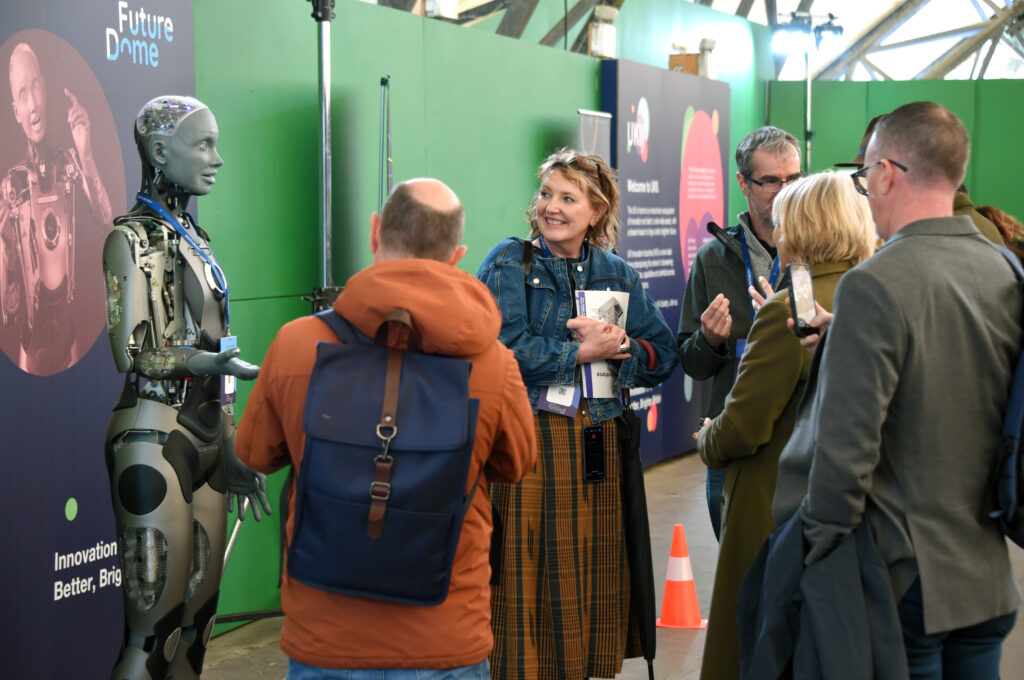
Octavius Black, Chair and Founder of MindGym, added: “We are fast moving to a world of ‘have bots’ and ‘have nots’. The people most likely to be left behind are those not in work. Our economic and social priority needs to be to get the workless into meaningful jobs. Government, business and the third sector all have a vital role to play. Harness AI as a force for good. We all need to be AI-fluent – quickly.”
LEADERSHIP & RESPONSIBLE BUSINESS MATTERS
Despite the scale of the challenges, the tone across Anthropy 2026 was one of grounded optimism. “My cynicism has been chipped away over the past three days. And I leave here with more optimism than I’ve had in a very long time,” shared City AM’s Editor-in-Chief, Christian May.
Catherine Johnstone CBE, CEO of Royal Voluntary Service, added: “My heart and soul are absolutely filled up for the year ahead.”
Alastair Paton, Founding Partner of the Good Board, reflected on the broader significance of the gathering: “What inspired me most was the combination of wisdom and energy coming together across sectors and generations to think about a positive future for Britain.”
He also offered clear advice for leaders: “Firstly, we need to think more clearly about our national purpose, painting a much clearer picture of what we want to stand for. Secondly, we need to start building consensus for the long term, focusing more on where we agree and less on whether we are aligned on everything.”
Of course, the real test for responsible business lies beyond the event itself. Anthropy brings together an unusually broad coalition of leaders – from corporate CEOs and policymakers to campaigners, educators and creatives – precisely because no single sector can solve these challenges alone.
What this year’s gathering made clear is that the future of Britain will be shaped not only by markets or policy, but by how seriously business leaders embrace their responsibility to people, society and the planet – and by their commitment to continuing these conversations beyond the event.
Anthropy 2027 will return to Cornwall’s Eden Project on 10–12 March 2027. Click here to find out more and join next year’s conversations.
RELATED ARTICLES
From work and inequality to climate, health and leadership, more than 2,000 delegates will gather at the Eden Project to take part in one of the UK’s most ambitious cross-sector conversations – focused on building a stronger, fairer and more sustainable future.
The UK Government is missing out on billions in potential savings by failing to engage purpose-driven businesses in solving national issues like unemployment and mental health.
How far should corporate leadership go in shaping fairer workplaces and societies?
The latest World’s Most Ethical Companies ranking shows that business integrity isn’t just good practice, it drives stronger returns, resilience and long-term value.
Job seekers – especially Gen Z and millennials – believe it’s important for their current or future employers to take a stance on key social issues.
Corporate leaders are now under huge pressure from both employees and consumers to take a stand and address a variety of ‘hot-button’ social and political issues publicly.
Environmental and climate concerns play an important role in Gen Zs’ and millennials’ career decisions, revealed study.
CEOs worldwide are putting climate and environmental action at the heart of their long-term business goals.
Businesses that fail to adapt to mounting climate risks could see annual losses of up to $610 billion by 2035, according to WEF.