









With global progress still slow, International Women’s Day 2026 is shifting the focus from awareness to action, and the workplace is at the centre of that change.
As the world marks International Women’s Day (IWD) 2026 under the theme “Rights. Justice. Action.”, one message stands out: progress on gender equality is real, but far too slow. Women have made significant gains in education, political participation and boardroom representation in recent decades. Yet major inequalities remain. Pay gaps persist across industries, leadership roles remain disproportionately male, and women continue to carry the largest share of unpaid care work.
Increasingly, the battleground for change is not only governments or international institutions, it is the workplace. Organisations shape hiring decisions, leadership pipelines, pay structures and workplace culture. As a result, they play a crucial role in determining whether gender equality commitments translate into meaningful opportunities for women.
Alongside the UN’s theme for 2026, the IWD #GiveToGain campaign is reinforcing that message. The initiative encourages leaders and organisations to move beyond symbolic support and actively create opportunities — by sharing access, mentoring talent and elevating women’s leadership.
The principle is straightforward: when leaders open doors and invest in women’s progress, the benefits extend far beyond individuals, strengthening organisations, economies and communities. Against this backdrop, International Women’s Day 2026 is less about celebration alone and more about momentum — asking how governments, institutions and workplaces can turn long-standing commitments into lasting change.
WHAT IS INTERNATIONAL WOMEN’S DAY?
Celebrated annually on 8 March, International Women’s Day recognises the social, economic, cultural and political achievements of women while also drawing attention to the barriers that continue to limit equality. The day is supported by the United Nations, governments, businesses and civil society groups around the world. Each year focuses on a specific theme intended to galvanise action and accelerate progress on women’s rights.
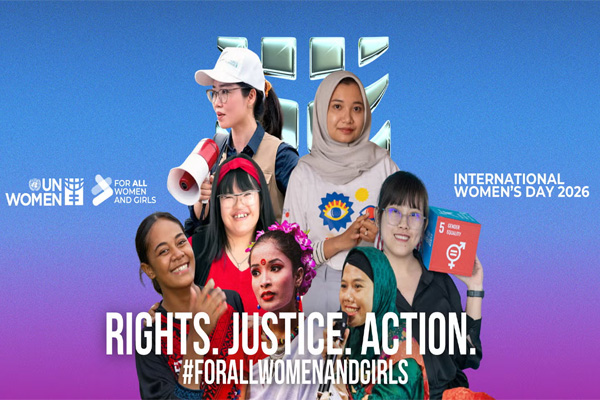
In 2026, the global campaign centres on three words: Rights. Justice. Action. The message is direct: equality cannot remain an aspiration. It must be protected by law, supported by institutions and delivered through real-world change.
Several key milestones are shaping the global gender equality agenda this year. They include:
- 8 March 2026: International Women’s Day is marked around the world through campaigns, workplace initiatives and community events focused on advancing women’s rights.
- 9-19 March 2026: The 70th session of the Commission on the Status of Women (CSW70) brings global leaders, policymakers and advocates together at UN headquarters in New York to discuss strengthening access to justice for women and girls.
- March 2026: Launch of the new UN Women Strategic Plan 2026–2029, outlining priorities for advancing gender equality worldwide over the next four years.
- 2026: First ministerial roundtable recognising the rights of older women, highlighting how gender inequality compounds over a lifetime and addressing issues such as pension gaps, healthcare access and age discrimination.
Together, these milestones reflect a growing recognition among policymakers and advocates that while progress toward gender equality is advancing, it is not happening fast enough to meet global goals.
GLOBAL GENDER EQUALITY GAP: KEY STATISTICS
The data behind the International Women’s Day 2026 theme reveals the scale of the challenge.
- Women hold only 64% of the legal rights that men do globally
- At the current pace, it could take 286 years to close legal protection gaps
- Women earn 20% less than men for work of equal value
- Women perform 2.5 times more unpaid care work than men
- Approximately 75% of lawmakers globally are men
- 102 countries have never had a woman head of state or government
- Every 10 minutes, a woman or girl is killed by an intimate partner or close relative
- There are 277 million more men than women using the internet
- Women hold only 27.2% of parliamentary seats globally
- 1 in 8 women experienced physical or sexual violence from a partner in the past year
- Climate change could push 158 million more women into extreme poverty by 2050
Taken together, these statistics highlight why access to justice has become the defining theme of the year. As Sima Bahous, Executive Director of UN Women, said ahead of CSW70: “Where access to justice is a reality, women and girls thrive. And where women and girls thrive, so do whole economies and their societies.”
She also warned that momentum cannot be taken for granted: “There is no pushback stronger than our collective efforts, no regression more powerful than our movement’s momentum.” And on the focus of this year’s Commission on the Status of Women: “CSW70 is for all women and girls who have been denied justice. Justice is what turns rights into reality.”
HISTORIC BREAKTHROUGH: RECOGNITION OF OLDER WOMEN
One of the most significant developments at CSW70 is the first ministerial roundtable dedicated specifically to older women. The recognition marks a shift in the global conversation around gender equality.
Older women often face a combination of challenges, such as:
- Lifetime pay inequality leading to pension gaps
- Career interruptions linked to caregiving responsibilities
- Age discrimination combined with gender bias
- Higher rates of financial insecurity later in life
For employers, this is not a distant policy issue. It reflects workplace realities already affecting talent retention. Over the last few months, Fair Play Talks has reported extensively on these challenges, from menopause stigma in the workplace to widespread age discrimination affecting women over 40.
WORKPLACE ISSUES BEHIND IWD 2026
Many of the challenges highlighted during CSW70, such as gender pay gap, caregiving and leadership, mirror the issues already shaping workplaces around the world.
The Gender Pay Gap
Women globally earn 20% less than men, and the consequences accumulate over decades. A recent study found that women in the UK effectively worked for free until late February compared with male counterparts due to the gender pay gap.
This gap is not caused by a single factor. Research shows that three-quarters of job categories still pay men more than women, reflecting structural issues including occupational segregation, promotion patterns and starting salary disparities.
The Caregiving Penalty
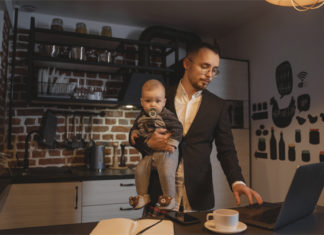
Women’s disproportionate share of unpaid care work – 2.5 times more than men globally – continues to shape career outcomes. Recent research found that seven in ten working caregivers struggle to balance employment with caring responsibilities, often forcing difficult trade-offs between career progression and family responsibilities.
These pressures can lead to reduced working hours, stalled promotions or even workforce exit.
Leadership Representation
Representation remains another critical challenge. Globally, 75% of lawmakers are men, and women hold just 27.2% of parliamentary seats.
Corporate leadership reflects similar patterns. Despite improvements in board representation, senior leadership roles remain overwhelmingly male. A recent report found that UK board representation for women has stabilised while top roles remain male-dominated, highlighting the persistent gap between representation and real power.
JUSTICE, SAFETY & DIGITAL INEQUALITY
Violence against women remains one of the most severe human rights challenges globally. The statistic cited during the International Women’s Day 2026 agenda – that a woman or girl is killed every 10 minutes by someone she knows –highlights the urgency of the issue.
At the same time, the digital gender gap is widening. With 277 million more men than women online, unequal access to technology risks reinforcing existing inequalities in employment, education and economic opportunity.
Closing the digital gap could lift millions of women out of poverty and add trillions to the global economy.
WHY EMPLOYERS SHOULD PAY ATTENTION TO IWD 2026
International Women’s Day is often marked with internal events and social media campaigns. But the message emerging from the global agenda this year is clear: symbolic gestures are no longer enough.
Organisations play a crucial role in turning equality commitments into real change. As Nobel Peace Prize laureate Nadia Murad said: “The next generation of women and girls deserve to inherit no more promises but the reality of justice, equality and dignity.”
Education activist Malala Yousafzai also emphasised the importance of collective action: “I am not telling men to step away from speaking for women’s rights; rather I am focusing on women to be independent to fight for themselves.”
And German Foreign Minister Annalena Baerbock summarised the broader stakes: “Women’s rights are always human rights. They are our rights – our future.”
WHAT WOMEN WANT FROM EMPLOYERS
As conversations around gender equality intensify during International Women’s Day 2026, employees are increasingly looking beyond symbolic gestures to meaningful change inside organisations. The reality is that while many companies have improved gender diversity at the board level, decision-making power remains unevenly distributed.
Recent research highlights shows that women now hold around 43% of board roles across FTSE 350 companies, a dramatic increase from just 9.5% in 2011. However, that progress has not translated into executive leadership power. CEO, chair and other top executive roles remain overwhelmingly male, highlighting what experts increasingly describe as the “gender power gap” – the difference between representation and real decision-making authority.
Fair Play Talks recently examined this imbalance in detail in its analysis of the latest FTSE Women Leaders Review, noting that while boardrooms are becoming more balanced, the most influential leadership roles continue to be dominated by men. The findings highlight a pattern that extends far beyond the UK. Globally, women often gain representation in non-executive or advisory roles, but remain underrepresented in positions that control strategy, budgets and organisational direction.
This distinction matters because representation alone does not guarantee influence. Leadership research shows that women are frequently channelled into support functions such as human resources or communications, rather than the profit-and-loss roles that typically lead to CEO positions. The result is a leadership pipeline that appears diverse at the surface level but still struggles to produce gender balance at the top.
ADDRESSING WOMEN’S REPRESENTATION & POWER
The growing conversation around representation versus power reflects a broader shift in how organisations approach gender equality. Where earlier diversity initiatives focused primarily on boardroom numbers, many experts now argue that the real test of progress lies in who holds decision-making authority.
For employees, the expectations are becoming clearer. They want workplaces that provide:
- Transparent pay structures
- Fair promotion pathways
- Leadership sponsorship
- Support for caregivers
- Inclusive workplace cultures
These priorities align closely with the #GiveToGain campaign, which encourages leaders to actively create opportunities for others rather than expecting progress to occur organically. In practice, this means leaders asking a different question: What opportunities are we giving today that will shape the leadership landscape tomorrow?
Because while representation has improved in many boardrooms, true equality will only be achieved when women have equal access to power, influence and leadership opportunities.
A PRACTICAL GUIDE FOR EMPLOYERS
Here are five ways employers can move the needle and improve equality for women in the workplace:
1. Audit pay equity
Analyse pay across roles, departments and promotion pipelines to identify structural inequalities. Find out more here.
2. Design work around caregiving needs
Flexible working and equitable parental leave policies can help address the career penalties associated with caregiving responsibilities, as reported here.
3. Provide better support for midlife and older women at work
Address menopause stigma and age discrimination to retain experienced talent, as explained here.
4. Build leadership pipelines
Sponsorship programmes and targeted leadership development can accelerate women’s progression into senior roles, as reported here.
5. Make diversity, equity and inclusion goals measurable
Embed accountability by linking diversity goals to leadership metrics and organisational strategy, as explained here.
WHAT HAPPENS AFTER IWD 2026?
International Women’s Day 2026 is expected to spark conversations far beyond March. Discussions during CSW70 at the United Nations will explore policies aimed at strengthening legal protections, economic inclusion and leadership equality for women and girls worldwide.
But many of the most immediate changes will happen closer to home, inside workplaces. From pay equity and caregiving support to leadership pipelines and inclusive policies, organisations have the power to turn the principles of Rights. Justice. Action. into measurable progress.
The message of International Women’s Day this year is simple: Equality is not achieved through awareness alone. It requires action and the willingness to give opportunities so everyone can gain.
RELATED ARTICLES
Over 1.2 billion women will be menopausal or post-menopausal by 2030, yet most workplaces still lack the policies and support systems needed to help them thrive.
Around 80% of women worldwide face ageism in the workplace, a new survey has revealed.
The average woman is effectively working for 47 days of the year for free compared with the average man, according to new analysis.
Around seven out of 10 family caregivers are struggling to balance their jobs with caregiving duties, according to a new survey.
Women’s representation on UK boards remains at 43% of FTSE 350 roles, unchanged from last year, while top executive positions continue to be dominated by men.
If organisations are serious about wanting to retain valuable women women workers, then they need to take active measures to help them get ahead, according to new analysis.
Sign up for our newsletter