










As global instability intensifies, frontline women-led organisations – vital to peacebuilding and humanitarian aid – face a devastating funding cliff.
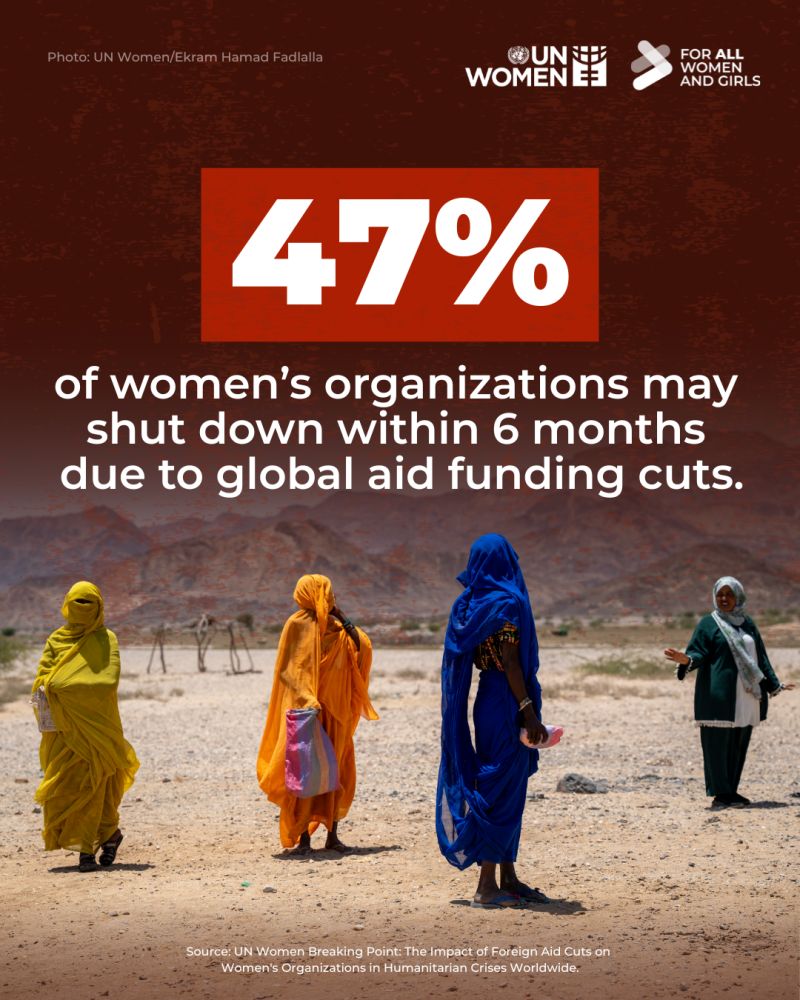
In a stark warning from Geneva, two of the United Nations’ flagship gender equality funds have sounded the alarm over the existential threat facing women-led civil society organisations in crisis-affected regions. Amid rising global conflict, aid budget cuts and growing threats to women’s rights, nearly half of women’s organisations (47%) operating in humanitarian settings could be forced to shut their doors within six months if current reductions in international funding continue.
This alarming figure was revealed in new research from UN Women, highlighting what advocates are calling a “make or break” moment for global feminist movements. The potential closures pose catastrophic consequences for women and communities already grappling with conflict, displacement and poverty.
LIFELINE FOR MILLIONS NOW AT RISK
The UN Trust Fund to End Violence Against Women and the Women’s Peace and Humanitarian Fund (WPHF) recently jointly released their 2024 Annual Reports just a few days ago, detailing urgent needs and a clear demand for sustained investment.
Last year alone, the UN Trust Fund supported 180 women-led organisations across 74 countries, reaching 14.7 million people – over half of them women and girls. Yet more than 70% of these partners faced backlash. This included threats, digital surveillance and funding cuts, according to the Fund’s Beyond Backlash report.
“In the face of rising anti-rights movements, women-led organisations are not retreating – they are rising,” said Abigail Erikson, Chief of the UN Trust Fund. “This year’s results prove that when we invest in women’s rights organisations, we invest in systemic, lasting change.”
URGENT SUPPORT NEEDED
The Women’s Peace and Humanitarian Fund extended support to 579 local women-led civil society groups and 344 women human rights defenders across 34 conflict and crisis-affected countries in 2024. Notably, nearly half of these organisations were first-time UN funding recipients, reflecting WPHF’s commitment to accessibility for grassroots actors often overlooked in traditional aid pipelines.
WPHF’s flexible funding approach is lauded for allowing rapid, localised responses to shifting crises. But its leadership warns that ad hoc support is not enough. “Support must be sustainable and CSO-driven, which is exactly what our local partners are urgently calling for,” said Tonni Ann Brodber, Head of the WPHF Secretariat. “Community-based organisations need the tools to adapt, innovate, and lead their own solutions.”
SOARING DEMAND FOR AID
As global crises escalate, demand for aid has soared. The UN Trust Fund received $1.5 billion in funding requests last year, yet could only meet a fraction. The funding shortfall is endangering services that support survivors of gender-based violence, provide healthcare, offer psychosocial support and deliver peacebuilding programmes.
Hala Al-Karib, Regional Director of the Strategic Initiative for Women in the Horn of Africa, a partner of both funds, stressed the critical role of sustained investment. “Support from funds like the UN Trust Fund and WPHF is not just helpful – it is essential to protect rights, meet basic needs, and ensure that women and girls are not left behind.”
SHIFT IN STRATEGY
To meet rising needs, the UN is calling for a fundamental shift in how aid is delivered: more coordinated, more flexible, and more locally led. WPHF and the UN Trust Fund are working together to streamline a funding pipeline within the UN system, linking immediate crisis response with long-term development support.
This strategy allows women’s organisations to transition from survival to sustainability, particularly in volatile contexts marked by conflict, natural disasters or political instability.
2025: DEFINING YEAR FOR WOMEN’S RIGHTS
The urgency of this moment is amplified as the world prepares to mark two historic milestones in 2025: the 30th anniversary of the Beijing Declaration and Platform for Action, and the 25th anniversary of UN Security Council Resolution 1325 on Women, Peace and Security.
WPHF and the UN Trust Fund are issuing a joint call to action for governments, donors, and multilateral partners: It is time to scale up investments in women’s leadership and feminist movements. These are the frontline defenders of peace, justice, and human rights—especially in the world’s most challenging environments.
CREATING SAFER COMMUNITIES
As the international community navigates unprecedented challenges – from war to climate change – the evidence is clear. Funding women-led organisations is not charity; it is smart policy. It creates safer communities, strengthens democracy, and builds peace from the ground up.
Now, as ever, the world cannot afford to let these lifelines disappear. Check out the report, At a breaking point: The impact of foreign aid cuts on women’s organizations in humanitarian crises worldwide, here.
RELATED ARTICLES