












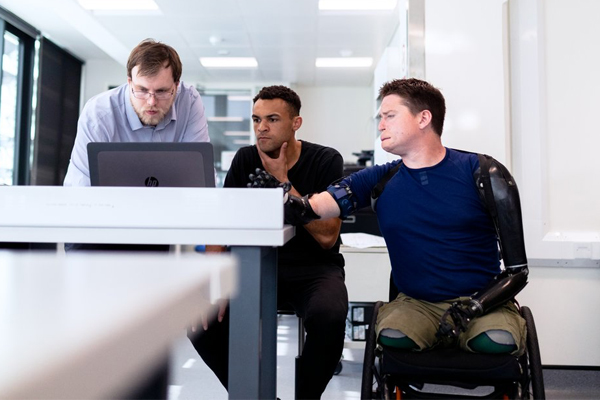
In this week’s guest column, Diane Lightfoot, CEO of the Business Disability Forum speaks to Fair Play Talks about how organisations are continuing to go the extra mile on disability inclusion, and why the business case for doing so remains as strong as ever.
A question that we get asked a lot at Business Disability Forum right now is how political events across the globe are affecting the diversity and inclusion agenda in the UK. And, how, in turn, businesses are responding.
Whilst a number of businesses have publicly or privately rowed back on their diversity, equality and inclusion (DEI) initiatives and projects in the wake of announcements from the US administration, many more businesses have not. And 71% of UK businesses said they had no plans to do so, according to research by the IoD.
It is not only research, however, that shows this to be true. We are also seeing in our day-to-day work with our 600-plus members, the ongoing commitment to making disability inclusion a reality. This is not only because it is the right thing to do but because it makes sense in terms of better representing the customer base, driving innovation and helping employers to meet the ongoing skills gap.
Our Disability Smart Awards are an annual reminder of the practical actions that businesses are taking to improve the experiences of disabled people in the workplace and as customers. The disabled community should expect and certainly deserve no less. Yet, the winners and finalists of our recent awards should be rightly proud of what they have achieved at a time when organisations are facing so many competing challenges.
OPENING-UP WORKPLACE ADJUSTMENTS
Ofgem was one of the winners in this year’s Disability Smart Inclusive Workplace Experience categories. They won for their Optimal Working Passport (OWP) adjustment system, which means that all employees can request adjustments as they need them.
The information about the adjustments can be shared with chosen colleagues, such as line managers, via an accessible app. Once an adjustment is requested a workflow is created and relevant teams, such as HR and IT, are alerted. The whole process can be easily monitored, so new adjustments can be added, and any delays can be identified and addressed. A fifth of Ofgem staff now have an OWP and user feedback has been very positive.
WORKING FLEXIBLY & SHARING KNOWLEDGE
Inkfire Limited was the second winner in the inclusive workplace experience category. This organisation is a disabled-led small business offering marketing, tech, website and virtual assistant services to businesses globally.
Inkfire Limited has developed a flexible working framework around the needs of its disabled employees. The framework includes remote working options, task-specific workflows and custom schedules that adapt to individual needs. This means that employees can thrive in their roles without compromising their well-being.
Alongside this, the organisation has mentored over 200 small businesses to help them become more accessible, increasing the reach and impact of their work.
DESIGNING WITH INCLUSION IN MIND
The physical environment is also important when it comes to workplace inclusion as shown by RNIB, the winners of our Disability Smart Built Environment category for their work to transform their new London Headquarters into a modern, inclusive and accessible workspace.
RNIB wanted to create a space that met the needs of the 15 per cent of their workforce who are blind or partially sighted as well as customers and volunteers. They also wanted a space that embraces neurodiversity.
The result is their Grimaldi Building, an accessible headquarters and the first in the UK to adopt the new guideline BSI PAS 6463 (Design for the Mind – Neurodiversity & the Built Environment). The building includes lighting which can be adjusted for each desk and meeting area along with tactile signage and navigation elements and a user-controlled serenity space. It has become an exemplar for architects, students and other organisations on how to successfully retrofit an existing building with inclusion in mind.
A DISABILITY INCLUSIVE FUTURE
There are learnings for all organisations from this year’s Disability Smart Award winners and finalists. These learnings are even more pertinent against the backdrop of current geopolitical events and the thirtieth anniversary of the introduction of the Disability Discrimination Act in 1995.
- The case for disability inclusion remains as strong as ever. As the examples in this article show, disability inclusion isn’t about just doing ‘what is right’. It’s about the tangible benefits that inclusion can deliver for everyone. This includes staff, customers and volunteers.
- Working inclusively does not need to be difficult or costly. The ideas that work best are often those that look to simplify things. Whether that’s processes, systems or even spaces and empower individuals by offering choice over how and where they work.
- When you have found something that works be willing to share it. Many of this year’s Disability Smart Awards winners have gone to great lengths to share their own learnings to positively impact the work of other organisations around disability inclusion. It’s by sharing stories that we can show the positive impact of diversity and multiply its benefits.
BDF has created a free resource to help all businesses make the case for disability inclusion. Click here for more information.
ABOUT THE AUTHOR
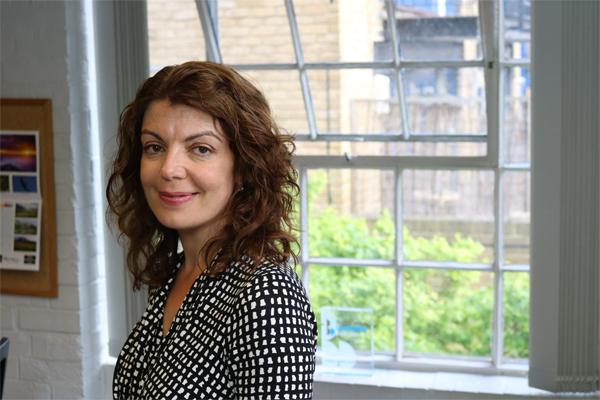
Diane Lightfoot is CEO of the Business Disability Forum.
RELATED ARTICLES
Check out 2025’s Disability Smart Awards Winners here.
As more organisations tout their commitments to diversity, some face accusations of “purple washing” as they are publicly claiming to support disability inclusion without putting in the real work.
Businesses missing out on over £13 trillion in disability spending power.
Sign up for our newsletter