













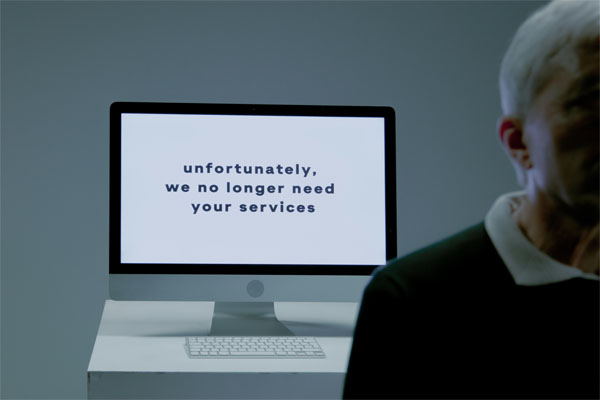
A new global survey has found that 60% of companies plan to lay off employees who cannot or will not use AI, signalling a profound shift in how organisations define value, performance and job security.
The report titled AI Adoption in the Enterprise from WRITER, was conducted in partnership with Workplace Intelligence and surveyed 2,400 global employees and C-suite leaders using AI at work. The study reveals that companies are increasingly dividing employees into two groups – those who use AI effectively, and those who do not. The report showed that:
- 92% of executives say they are cultivating an “AI elite”
- 87% report these workers are at least 5x more productive
- 77% say AI laggards will be excluded from promotions
For employees, the implications are immediate. The ability to work alongside AI is quickly shifting from a competitive advantage to a baseline expectation. This reflects broader workforce trends. As previously reported by Fair Play Talks, many employees globally remain unprepared for AI, with growing “AI anxiety” and uneven adoption across roles and seniority levels.
INTENSIFYING PRESSURE AT THE TOP
The shift is not only affecting frontline workers, but also placing unprecedented pressure on leadership. According to the study:
- 79% of executives report struggling with ROI, strategy gaps, or internal alignment
- 38% of CEOs say AI strategy is causing high or crippling stress
- 64% fear losing their job if they fail to lead AI transformation
This highlights a growing leadership dilemma: companies know AI is critical, but many still lack a clear roadmap. AI adoption is as much a cultural and organisational challenge as a technical one (as reported), with trust, communication and leadership alignment emerging as key barriers to success.
AI STRATEGY INVESTMENT AND RETURNS
Despite widespread optimism, the report reveals a persistent gap between AI ambition and actual business outcomes. The survey reveals that:
- 97% of executives say AI has been beneficial
- 75% believe AI agents will become part of the C-suite within five years
- Yet only 29% report significant ROI from generative AI
- And just 23% report ROI from AI agents
- Nearly 48% say AI adoption has been a “massive disappointment”
At the same time, 75% of executives admit their AI strategy is “more for show” than practical guidance. This disconnect comes despite evidence that AI can deliver real gains. Separate research found that employees using AI save up to 7.5 hours per week – the equivalent of a full working day.
AI TRANSFORMATION
As companies push forward, the human impact of AI transformation is becoming increasingly visible. And as adoption accelerates, internal tensions are rising sharply, noted the report. According to the data:
- 69% of the C-suite report their company is already doing layoffs due to AI
- 54% say AI adoption is “tearing their company apart”
- 56% report power struggles and disruption internally
- 78% say AI is creating tension between IT and other teams
- 55% describe AI use as a “chaotic free-for-all”
At the same time, resistance is emerging from employees:
- 29% of workers admit to sabotaging AI initiatives
- Rising to 44% among Gen Z employees
- 76% of executives say sabotage is a serious threat
This aligns with broader concerns that AI is reshaping workplace dynamics. Fair Play Talks has reported that more than half of employers fear AI could even undermine collaboration, raising questions about its long-term impact on teamwork and culture.
AI AMPLIFYING HUMAN SKILLS
Perhaps the most significant takeaway is that AI is amplifying – not replacing – the importance of human skills. Recent reports shows that as AI adoption increases, so too does demand for core capabilities like communication and adaptability. For example, 81% of employers say AI is increasing the need for English proficiency, showcasing how human skills remain central to productivity.
Beyond immediate disruption, the study highlights deeper structural change:
- 95% of executives say roles, titles, and team structures are changing due to AI
- 90% say performance evaluation systems will need to be rethought
- 80% of Gen Z trust AI more than their manager for tasks like feedback and career advice
These shifts suggest AI is not just a tool, but a force reshaping how work itself is defined. Rapid adoption is also exposing companies to significant security and governance-related risks. For example:
- 67% say their company has experienced a data leak due to unapproved AI tools
- 35% are not confident they could shut down a rogue AI agent
This highlights the growing need for enterprise-grade governance frameworks as AI becomes embedded across operations.
WORKFORCE CUTS
Despite the scale of disruption, May Habib, CEO & Co-Founder of WRITER warns against over-reliance on workforce cuts. “Layoffs are not a viable AI strategy,” stressed Habib. “I’m on the front lines with WRITER’s Fortune 500 customers, and the leaders who are putting in the work to radically redesign operations with human-agent collaboration at the centre are the ones compounding their advantage in ways competitors can’t replicate. AI transformation is ultimately about people, and the future belongs to the companies putting agent-building power directly into the hands of people closest to the work.”
Habib argues that companies must instead:
- Tie AI initiatives to measurable outcomes
- Empower employees without creating IT bottlenecks
- Focus on growth, not just cost-cutting
- Implement enterprise-grade governance
- Build structured, documented roadmaps
WIDENING GAP BETWEEN AI LEADERS AND LAGGARDS
Dan Schawbel, Managing Partner at Workplace Intelligence, said the divide is already visible. “This is a defining moment in AI adoption, and the gap between super-users and laggards is widening fast. We’re already seeing this play out – the super-users we surveyed were around 3X more likely to have received both a promotion and pay raise in the past year, compared to employees who have been slow to adopt these tools. Top AI users are also saving nearly 9 hours per week using AI – 4.5X more than the 2 hours a week reported by AI laggards.”
Mina Alghaband, Chief Customer Officer at WRITER, emphasised that productivity alone is not enough. “The top AI users are gaining huge amounts of leverage inside organisations. To turn these individual productivity gains into real business ROI, copilots aren’t enough. Companies need enterprise AI platforms that support deeper structural change,” she said.
GUIDANCE FOR EMPLOYERS
The findings highlight that the AI transition is not just technological, it is deeply human. Companies that rely solely on layoffs risk widening internal divides and undermining long-term performance.
Those that invest in skills, strategy, and culture may be better positioned to turn AI from disruption into durable advantage. In the end, the future of work will not be defined by AI alone, but by how organisations choose to integrate it into the fabric of their workforce.
In short, AI adoption is accelerating, but alignment is lagging. Companies that rely on workforce cuts alone risk creating deeper divisions and long-term instability. Those that invest in skills, strategy and culture will be better positioned to turn AI into a sustainable competitive advantage. Here are some key pointers to help employers do that:
1. Invest in workforce-wide AI skills
Rather than concentrating expertise in a small “AI elite,” organisations need to raise the baseline across the entire workforce. That includes:
- Structured AI training programmes
- Role-specific use cases
- Continuous upskilling tied to real workflows
As Fair Play Talks has reported, the AI skills gap is now one of the biggest barriers to adoption, not the technology itself.
2. Close the strategy gap
With 75% of executives admitting their AI strategy is “more for show”, clarity is becoming a competitive advantage. Employers should:
- Define clear business outcomes for AI
- Align initiatives with revenue and productivity goals
- Move beyond experimentation to scaled execution
3. Redesign work around human–AI collaboration
AI is not just replacing tasks, it is reshaping roles. Organisations should:
- Redefine jobs to integrate AI capabilities
- Focus on augmentation rather than substitution
- Update performance metrics to reflect hybrid work
4. Strengthen governance and security
With 67% reporting data leaks tied to AI use, governance is no longer optional. Companies must:
- Establish clear policies for AI usage
- Implement enterprise-grade oversight
- Ensure rogue systems can be controlled or shut down
5. Address cultural resistance early
Employee pushback – reported by 29% of workers and 44% of Gen Z – signals a deeper issue. To reduce resistance, employers should:
- Communicate transparently about AI’s role
- Involve employees in adoption decisions
- Position AI as a tool for growth, not replacement
Fair Play Talks has noted that fear and lack of clarity, not capability, are often the root causes of resistance, as reported.
6. Tie AI to measurable business outcomes
One of the biggest gaps identified in the report is ROI. To close it, organisations need to:
- Track productivity, retention, and cost savings
- Build CFO-ready performance dashboards
- Connect AI initiatives directly to business impact
RELATED ARTICLES
AI is moving faster than most employees around the world can keep up with, causing ‘AI anxiety’ in the workplace, according to study.
AI will only succeed in the workplace if organisations prioritise people over platforms, according to experts.
Employees using AI are saving the equivalent of a full working day every week, according to research.
More than half of US employers say they worry AI could eventually replace teamwork, despite the fact that it is helping employees collaborate more effectively.