











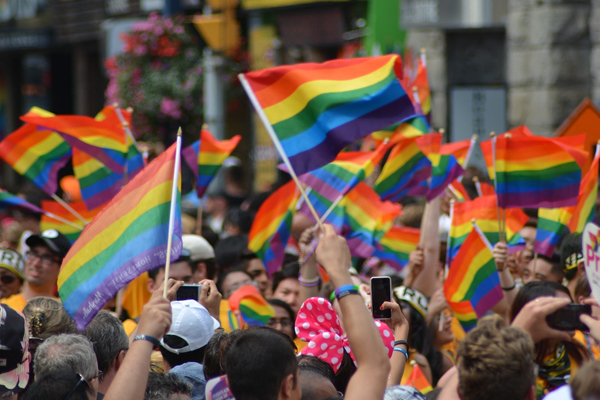
As Pride Month ends, new research shows consumers still expect brands to support LGBTQ+ communities year-round, despite many companies scaling back Pride and DEI initiatives.
New research from ecommerce marketing platform Omnisend found that almost half of Americans (48%) believe brand participation in Pride Month is important, rising to 69% among Gen Z consumers and 76% among LGBTQ+ respondents. Yet 37% of those surveyed said they had noticed companies pulling back their Pride activity over the past year.
The findings highlight a growing disconnect between corporate behaviour and consumer expectations at a time when many businesses are scaling back public Diversity, Equity and Inclusion (DEI) initiatives amid political pressure and concerns over backlash. “Consumers are paying much closer attention to whether brands stick to the values they talk about,” said Marty Bauer, Ecommerce Expert at Omnisend. “That applies to Pride campaigns, but also to sustainability, social issues and company culture in general. Topics tied to identity tend to draw even more attention because people often take them personally.”
Across the US and UK, major brands have reduced sponsorships, quietly withdrawn from Pride events or shifted support behind the scenes. Pride organisers across North America and the UK have reported significant funding shortfalls, with some events forced to reduce programming or seek alternative funding streams.
CONSUMERS WANT AUTHENTIC SUPPORT NOT RAINBOW WASHING
Despite the corporate retreat, public support for LGBTQ+ inclusion remains strong. Separate polling by GLAAD this year also found broad public support for corporate engagement with LGBTQ+ communities. Alongside the 68% of Americans who believe companies should be free to support LGBTQ+ communities during Pride, 61% said public corporate support has a positive impact on LGBTQ+ acceptance, while 73% believe CEOs have a responsibility to speak out on issues that matter to consumers and shareholders. The research also found that 76% of Americans are more likely to trust brands that remain true to their values, even when doing so is controversial.
The Omnisend study suggests consumers are becoming increasingly sophisticated in how they judge corporate involvement. Forty-five per cent said only brands that genuinely support LGBTQ+ rights should participate in Pride campaigns, while one in four expects support to continue throughout the year rather than being limited to June. Consumers identified donations to LGBTQ+ organisations, public advocacy and meaningful representation in advertising as the clearest indicators of authentic commitment.
WHICH COMPANIES ARE STILL SHOWING UP?
While many organisations have stepped back, others continue to publicly support LGBTQ+ communities. Speaking at OutBritain’s OutConnect 2026 event hosted by Sky yesterday (29 June), Nick Herm, Group Chief Operating Officer at Sky and executive sponsor of the company’s LGBTQ+ employee network, said businesses must remain true to their values, particularly during difficult periods.
“There are moments in history when doing the right thing is easier, and moments when it’s harder. It’s precisely when your values are challenged that it’s most important to stay true to them,” Herm said. “I’m proud that Sky is not bending its values. We will continue to stand by those values now and in the future.”
Herm also stressed the commercial benefits of inclusion. “Diversity and inclusion are good for business. In industries as competitive and fast-moving as media and connectivity, you need the very best ideas and perspectives, and you need to reflect all of your customers if you’re a mass-market brand,” he said.
Brands including Levi’s, Google, TikTok, SWISS and Diesel have maintained visible Pride campaigns in 2026, increasingly combining marketing activity with donations, employee initiatives, community partnerships and year-round inclusion programmes.
BEYOND PRIDE: SUPPORTING LGBTQ+ COMMUNITIES 365 DAYS A YEAR
For Matt Dabrowski, CEO and Founder of OutBritain, authentic support extends far beyond Pride campaigns. “OutBritain exists not simply to celebrate LGBTQ+ businesses, but to help them grow, because visibility doesn’t pay invoices. Opportunity does, connections do, and winning contracts does,” Dabrowski said.
He argues that businesses should view LGBTQ+ inclusion as both an economic and social opportunity. “People still describe LGBTQ+ businesses as a niche. They are not. There are more than 250,000 LGBTQ+-owned businesses across the UK, employing around 750,000 people and contributing more than £107 billion to the UK economy. This isn’t a niche – it’s an economy, and it’s an economy that deserves investment.”
Dabrowski also called on organisations and consumers to intentionally support LGBTQ+-owned suppliers. “Every pound we spend is a vote – a vote for the kind of community we want to build. If we want other organisations to invest in us, we also have to invest in one another.”
At Sky, supplier inclusion is increasingly becoming part of everyday business practice. “It’s starting to become simply how we do business. Supplier inclusion is no longer a separate initiative – it’s becoming embedded in the way organisations operate,” said Patricia Mensah, Senior Supplier Inclusion Manager at Sky.
Mensah also challenged assumptions about diverse-owned businesses. “One of the biggest misconceptions is that diverse-owned businesses can’t cope with the scale of large corporate contracts. The reality is the opposite. The quality, innovation and expertise we see from these businesses is extremely high.”
Maria Harrison, Associate Director at EY, said diverse suppliers often provide businesses with innovation and competitive advantage. “If I want the same solution that everybody else has, I’ll go to the big technology companies. If I want something that differentiates our business, offers exclusivity and brings innovation, I’ll go to a small business. That’s why this market is important.”
Harrison added: “We’re not doing this as a charity initiative. We need diverse founders because they create jobs, drive growth and bring innovation. The UK needs entrepreneurs, and many of those entrepreneurs come from minority communities.”
WHAT AUTHENTIC LGBTQ+ INCLUSION LOOKS LIKE
Experts say businesses seeking to meet consumer expectations should focus on year-round action rather than seasonal campaigns. Bauer said consumers are increasingly looking beyond Pride campaigns themselves and assessing whether businesses demonstrate ongoing commitment.
“For retailers, this means that a Pride campaign isn’t being judged only on the ad itself anymore. People look at whether the brand shows up consistently, even outside of June,” he said.
“They might not expect every brand to make bold political statements, but they do expect messaging and company behaviour to feel real rather than reactive.”
That includes:
- Supporting LGBTQ+ employee networks year-round.
- Maintaining transparent DEI policies and reporting.
- Buying from LGBTQ+-owned suppliers and diverse businesses.
- Partnering with LGBTQ+ charities and community organisations.
- Ensuring LGBTQ+ representation across leadership, marketing and supply chains.
- Recognising key moments across the LGBTQ+ calendar, including events such as Lesbian Visibility Week.
- Creating meaningful opportunities for LGBTQ+ entrepreneurs and founders.
Research also suggests that visible inclusion efforts have a direct impact inside organisations. Earlier this year, a study found that decline in DEI transparency was linked to increased stigma and lower productivity among LGBTQ+ employees, while another study found that homophobia and exclusion remain widespread in UK workplaces.
As Pride Month comes to an end, the latest research suggests consumers are no longer satisfied with rainbow logos alone. Increasingly, they are looking for companies that show up consistently, invest in LGBTQ+ communities and remain true to their values throughout the year. For brands hoping to build trust, loyalty and long-term relevance, Pride may last a month – but meaningful support must last all year.
HOW EMPLOYERS CAN DELIVER YEAR-ROUND MEANINGFUL LGBTQ+ INCLUSION
Experts say authentic LGBTQ+ inclusion is built through consistent action rather than one-off campaigns during Pride Month. For employers, that means embedding inclusion into workplace culture, leadership, procurement and employee wellbeing throughout the year. Key actions include:
1. Maintain transparent DEI commitments
Businesses should continue to publish and communicate their diversity, equity and inclusion goals, policies and progress. Research has shown that reduced transparency around DEI can increase stigma and negatively impact LGBTQ+ employee wellbeing and productivity.
2. Support Employee Resource Groups
Employee networks and LGBTQ+ affinity groups can play a vital role in creating belonging, shaping company policies and supporting colleagues. Organisations should ensure these groups are properly funded, visible and supported by senior leadership.
3. Invest in LGBTQ+-owned businesses
Procurement is one of the most tangible ways companies can demonstrate commitment. “Every pound we spend is a vote – a vote for the kind of community we want to build,” said Matt Dabrowski, CEO and Founder of OutBritain. “If we want other organisations to invest in us, we also have to invest in one another.”
4. Create inclusive workplace cultures
This includes implementing robust anti-discrimination policies, providing inclusive benefits, supporting trans and non-binary employees, and ensuring managers receive regular inclusion training.
5. Celebrate LGBTQ+ communities beyond Pride
While Pride Month remains important, employers should also recognise other significant dates throughout the year, including LGBTQ+ History Month, Trans Day of Visibility, Coming Out Day, Bi Visibility Day and Lesbian Visibility Week.
6. Ensure representation matters
Consumers increasingly expect to see authentic LGBTQ+ representation in leadership, marketing, supplier diversity programmes and decision-making processes. As Omnisend’s Marty Bauer noted: “People look at whether the brand shows up consistently, even outside of June. They might not expect every brand to make bold political statements, but they do expect messaging and company behaviour to feel real rather than reactive.”
Ultimately, experts say employees and consumers alike are looking for organisations that demonstrate inclusion not as a campaign, but as a long-term commitment.
RELATED ARTICLES
From global activists to industry leaders, LGBTQIA+ women and non-binary people are challenging inequality, driving accountability and helping build a fairer, more inclusive world.
Trans in the City has unveiled its inaugural Trans and Non-Binary Changemakers List, recognising individuals making a meaningful difference across the UK’s business, not-for-profit and grassroots sectors.
The annual Football vs Homophobia Awards honoured the champions pushing for inclusion in the game during LGBTQ+ History Month.
A sharp 65% drop in Fortune 500 companies publicly communicating DEI commitments has coincided with rising reports of stigma, job insecurity and declining productivity among LGBTQ+ workers, according to new research.
Over half a million LGBTQ+ workers in the UK have experienced workplace bullying, discrimination, or harassment, according to a stark new warning from the UK’s TUC.
Homophobia and exclusion remain alarmingly common in the workplace, particularly for LGBTQ+ professionals striving to progress in their careers, reveals study.