















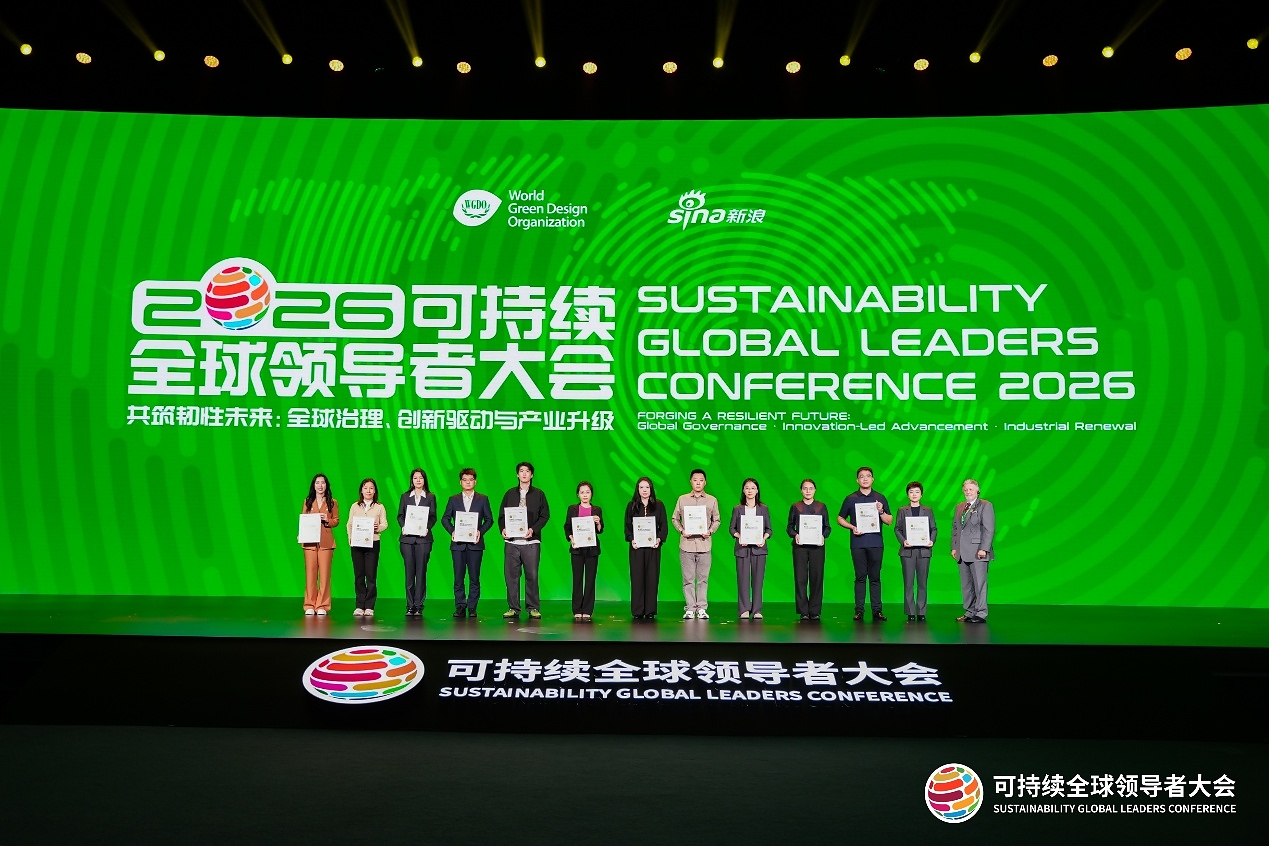
As AI reshapes economies and workplaces, growing questions are being raised about who controls the technology, who profits from its advances and who bears the risks. Nobel Peace Prize laureate Tawakkol Karman and other international experts called for stronger AI governance, corporate accountability and a fairer distribution of the technology’s economic benefits at the recent 2026 Sustainability Global Leaders Conference in Shanghai.
As artificial intelligence (AI) transforms industries, workplaces and economies, international leaders are questioning whether technological progress is delivering benefits for society as a whole or concentrating wealth and power among a relatively small number of companies. The debate was a central theme of the 2026 Sustainability Global Leaders Conference, held in Shanghai from 20–22 October, which brought together policymakers, academics, business leaders and international organisations to examine the future of sustainable development.
Co-hosted by the World Green Design Organization (WGDO) and SINA Group, with support from the Beijing Office of the IFRS Foundation, the event attracted more than 400 speakers from 28 countries, according to organisers. Although discussions covered climate action, green technologies, corporate sustainability and economic resilience, artificial intelligence emerged as a major focus, raising questions about governance, human agency and who stands to gain from technological advancement.
AI MUST SERVE HUMANITY, NOT THE OTHER WAY AROUND
Tawakkol Karman, the 2011 Nobel Peace Prize laureate, challenged governments and businesses to look beyond AI’s technological capabilities and consider its wider implications for society. Karman argued that discussions about artificial intelligence must address fundamental questions of control, accountability and fairness: who owns and controls AI systems, who benefits from their economic value, and who ultimately bears the risks.
While recognising AI’s potential to transform healthcare, education, industry and energy, she stressed that technology must remain in the service of humanity rather than the other way around. Her intervention highlights a growing challenge for businesses investing heavily in AI: ensuring that technological advancement delivers meaningful social benefits rather than focusing exclusively on commercial returns.
This question is becoming increasingly relevant within workplaces. Recent research revealed that nearly half of mid-sized companies lack clear leadership accountability for how employees and AI work together. The research found that although AI adoption and investment are widespread, many organisations have yet to establish clear responsibility for how the technology affects jobs, workflows and employee experiences.
The findings illustrate why responsible AI governance requires more than technological investment. Businesses must also establish who is accountable for the decisions AI influences and how those decisions affect people.
SHOULD AI PROFITS BE SHARED MORE FAIRLY?
One of the conference’s most thought-provoking proposals came from Alan Macfarlane, Cambridge anthropologist and Fellow of the British Academy, during a high-level dialogue titled AI and the Future of Humanity. Macfarlane suggested creating a trust fund through which some of the profits generated by artificial intelligence could be directed towards public welfare, rather than allowing technology companies to capture the economic gains exclusively.
The proposal raises wider questions about how the wealth created by AI should be distributed, particularly as automation reshapes employment, productivity and the relationship between businesses and workers. Should the economic gains from AI primarily reward the companies developing and deploying the technology, or should a greater share contribute to wider societal benefits?
The issue is especially relevant as evidence emerges that improvements in workplace productivity do not necessarily translate into lighter workloads or better conditions for employees. Recent research found that 71% of employees believe AI makes them more productive, yet workloads remain largely unchanged. Separate research revealed that 46% of US workers using AI face rising workload expectations, while 45% spend at least an hour each week correcting colleagues’ AI-generated work.
Although these studies do not establish how AI’s financial benefits are distributed, they raise important questions about whether workers are sharing sufficiently in the gains generated by the technology. Macfarlane’s proposal moves the debate beyond workplace productivity to the broader distribution of AI-generated wealth. However, the conference account did not set out a detailed funding mechanism or indicate that governments or companies had committed to introducing such a scheme.
CONCERNS OVER AI’S IMPACT ON HUMAN CONNECTION
The discussion also explored how artificial intelligence could influence human behaviour, relationships and social wellbeing. Macfarlane warned that AI platforms could potentially exploit people’s anxieties, or even intensify them to encourage purchases, raising ethical questions about how companies design and monetise digital services.
Meanwhile, Xiang Biao, Professor and Director at the Max Planck Institute for Social Anthropology, raised concerns about the erosion of people’s connections with their immediate surroundings. He argued that, as AI becomes increasingly embedded in everyday life, people risk becoming more detached from their communities, relationships and the world around them. His contribution highlighted the importance of preserving human agency and meaningful social connections in an increasingly technology-driven society.
These concerns extend to workplaces, where AI is becoming more involved in communications, decision-making, recruitment and the management of everyday tasks. In a recent guest column, behavioural scientist Dr Gleb Tsipursky argued that employees will trust AI agents only when human oversight and accountability remain visible. The column emphasised the importance of transparency, employee involvement and clear safeguards as businesses give AI systems greater autonomy. Together, these perspectives underline a common concern: technological efficiency should not come at the expense of human judgement, relationships or wellbeing.
GLOBAL AI REGULATION AND ACCOUNTABILITY
The need for stronger international oversight was another prominent theme. Joseph Sifakis, the 2007 Turing Award laureate, called for international standards governing AI regulation. His intervention highlighted the challenges facing governments and businesses as AI systems increasingly operate across national borders, industries and regulatory frameworks.
While AI offers significant opportunities for innovation, its expanding role in business and society raises questions about accountability, transparency and the safeguards needed to protect individuals. For multinational organisations, inconsistent approaches to AI governance can create uncertainty about how systems should be developed, deployed and monitored.
The wider debate also reflects growing concerns about the gap between corporate confidence in AI and the effectiveness of existing oversight. Previous research revealed that one in four executives reported AI-generated errors reaching boards or external audiences. That study also found that despite widespread confidence in AI-generated output, relatively few executives believed their organisations’ underlying data was sufficiently reliable for AI use.
The findings reinforce the importance of responsible governance, particularly when AI-generated information influences financial reporting, sustainability disclosures, investment decisions or other consequential business activities.
CONNECTING AI GOVERNANCE WITH SUSTAINABILITY
The Shanghai conference also positioned responsible technology development within a broader discussion about sustainability, economic resilience and international cooperation. Former UNESCO Director-General Irina Bokova highlighted China’s contribution to scaling clean-energy manufacturing and technologies, while Erik Solheim, former Executive Director of the United Nations Environment Programme (UNEP), pointed to the role of Chinese innovation in reducing the cost of green technologies.
The event also marked the publication of the Advancing Sustainable Development: Shanghai ESG Development Report 2026, examining how policymakers, financial institutions and businesses can strengthen environmental, social and governance practices. A further publication, the 2026 Compendium of Corporate ESG Practices, highlighted approaches to corporate sustainability.
Together, the discussions brought attention to the relationship between technological progress, environmental sustainability and social responsibility. They also highlighted the importance of translating ambitious commitments into measurable action. This remains a significant challenge for businesses. As previously reported, 84% of S&P 500 companies disclose climate targets, yet many are failing to achieve meaningful emissions reductions. While climate performance and AI governance present different challenges, both illustrate the need for businesses to demonstrate outcomes rather than relying solely on public commitments.
WHAT RESPONSIBLE BUSINESSES SHOULD DO NEXT
The questions raised at the conference have implications for boards, executives and organisations accelerating their investment in artificial intelligence. Businesses should consider whether their AI strategies adequately address the human, ethical and social consequences of technological change.
That means establishing clear accountability for AI-related decisions, assessing their effects on employees and wider stakeholders, maintaining meaningful human oversight and ensuring systems are designed and deployed responsibly. Organisations should also examine how productivity gains are being used. If AI enables employees to complete tasks more efficiently, businesses need to consider whether those benefits translate into improved working conditions, opportunities for development or simply higher performance expectations.
Equally important is transparency about how AI influences decisions affecting people’s employment, access to services, financial security and wellbeing. At board level, responsible AI governance should form part of wider discussions about corporate accountability, sustainability, reputation and long-term business value.
Ultimately, the debate should extend beyond whether AI can make organisations more productive or profitable to whether its adoption generates sustainable benefits for employees, customers and society.
FROM TECH TO HUMAN PROGRESS
The 2026 Sustainability Global Leaders Conference reinforced the importance of looking beyond technological capabilities to consider the wider consequences of innovation. From Karman’s call for AI to serve humanity to Macfarlane’s proposal for sharing AI-generated wealth and Sifakis’s emphasis on international regulation, the discussions raised fundamental questions about the responsibilities of governments, technology developers and businesses.
As artificial intelligence becomes increasingly embedded in economic and social life, those questions are likely to become more pressing. AI may create extraordinary opportunities for productivity, innovation and sustainable development. But whether those opportunities translate into broader human progress will depend on how the technology is governed, who remains accountable and how its benefits are shared.
The challenge for responsible business is not simply to demonstrate what AI can achieve, but to ensure that the people affected by it share in the benefits.
For more information, check out the 2026 Sustainability Global Leaders Conference website.
RELATED ARTICLES
Seven in 10 employees say AI is making them more productive, yet workloads remain virtually unchanged, reveals new research.
One in four executives reported AI-generated errors reaching boards or external audiences, study shows.
Nearly half of AI users face rising workloads, while 45% spend at least an hour a week correcting colleagues’ AI-generated work, reveals research.
Why clear boundaries, employee involvement and visible safeguards are essential to building trust in AI at work.
Despite widespread AI adoption and rising investment, nearly half of mid-sized companies lack clear accountability for how employees and AI work together, study shows.
A new report reveals 84% of S&P 500 companies have climate targets, but most are failing to reduce emissions. Here’s what employers need to know.
Four in 10 workers and executives fear AI will damage human connection and company culture, while nearly three in four employees say company values aren’t guiding its adoption, new research reveals.