









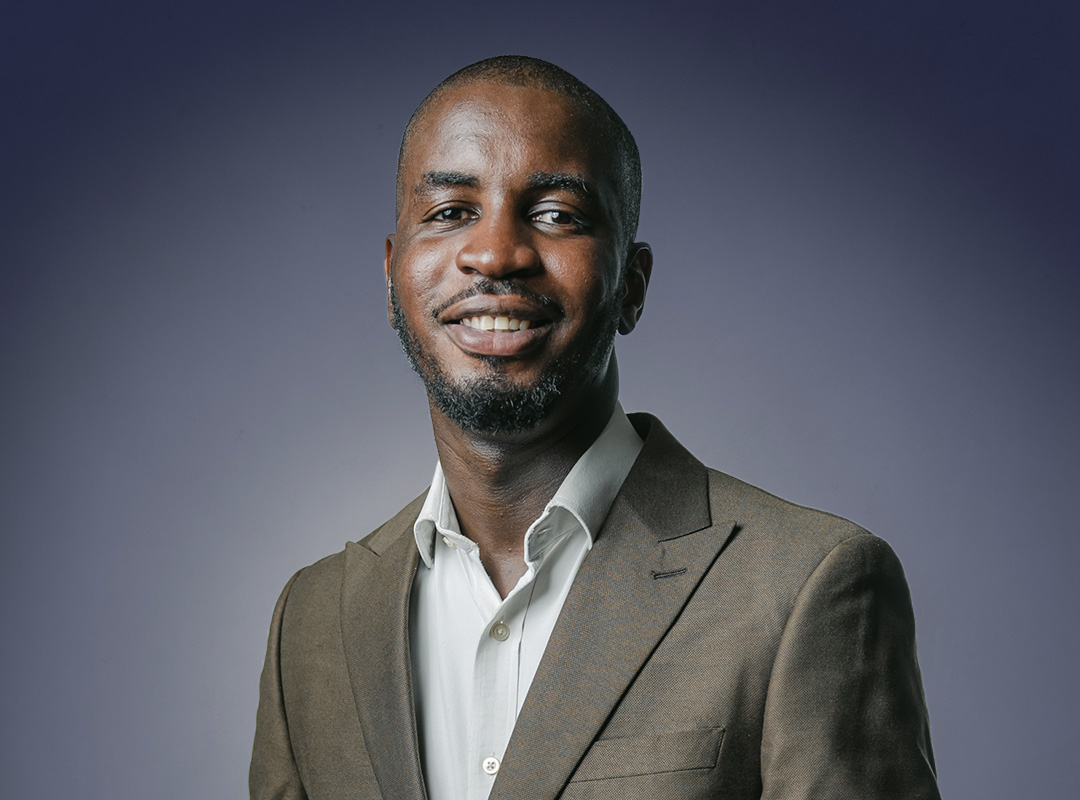
Barclays’ Nana Agyemang talks to Fair Play Talks about representation, racial equity, resilience and his ambition to help build a stronger community of Black professionals, entrepreneurs and allies.
As a finalist in the Rising Star category at the 2026 Black British Business Awards (BBBAwards), Agyemang shares his 12-year career journey in financial services, from starting out in the bank’s retail network to his current role as Proposition Delivery Manager for Barclays Eagle Labs, where his work spans communications, thought leadership and initiatives supporting founders, business innovation and the wider UK entrepreneurial ecosystem.
He also reflects on some of the barriers he has faced as a Black professional, the importance of visible role models and the role organisations can play in creating more meaningful opportunities for Black talent.
Fair Play Talks: Can you briefly tell us about your career journey to date?
Nana Agyemang: My career in banking started from the branch retail network, specifically Barclays’ flagship branch at the time – Piccadilly Circus. I started my journey with Barclays in 2014, as a young man that fell into financial services, despite my original plan being to work towards a career in journalism.
I was contacted by HR to inform me that my skillset appeared to be a good match for the flagship branch and although major imposter syndrome kicked in, I travelled in by bus on my first day from Hackney to Piccadilly, just to soak in the city. Thereafter, I applied consistency and a strategic approach to work, which enabled me to secure seven different roles across my twelve years at Barclays, including Personal Banker, Business Relationship Manager, Employee Comms Business Partner, Marketing Strategy Manager and now a Proposition Delivery Manager for the Barclays Eagle Labs.
Fair Play Talks: What specific challenges have you encountered along the way?
Nana Agyemang: I came from a lower socio-economic background and had no idea about a lot of the technicalities behind banking and our varied products and services, when I first started out. I would often have to spend hours reading and upskilling myself on ways of working, products and consumer trends. My young age at the time and background meant that I was sometimes doubted and even prejudiced by others, so I had to use their reservations as fuel to motivate me to get even better. I had no blueprint for success at senior levels in the bank, no understanding of managing senior stakeholders, acquiring new clients or managing a personal brand. So I had to apply my own lens on the best strategic approach to take, and learnt from mistakes along the way.
Fair Play Talks: In your industry, are there any specific challenges that Black professionals face on their career journeys that other groups of people do not encounter?
Nana Agyemang: Yes, 100%. I would often be doubted for my ability – both subtly and sometimes quite overtly. I was one of the bank’s youngest Business Relationship Managers back in 2019. That in combination with being a Black professional resulted in a lot of subtle comments about my perceived ability from customers and clients. I remember attending meetings, where client body language would say it all once the door was opened for me. For example, I was asked if I was an apprentice, venue security on occasions and a range of other similar questions.
I also had a lack of visible role models at the more senior levels of the bank for a while, which subconsciously made me feel that there were limits to my potential. It was only after joining an Employee Resource Group for Black Professionals, that I started to open up more and see long-term potential in my career trajectory.
Fair Play Talks: Are you involved in promoting Black talent, race equality or other diversity initiatives?
Nana Agyemang: Yes, I am a Deputy Co-Chair in Barclays’ Black Professionals Resource Group (BPRG). I am also proactively involved in delivering solutions to support Black founders through my business area the Barclays Eagle Labs. I was actively involved in delivering Barclays’ first accelerator for scaling Black founders, known as the ‘Black Venture Growth Programme’. Because I’m aware of the many barriers that typically stifle founders and professionals alike, from my background, I proactively use my position to champion them and initiatives that drive equity.
Fair Play Talks: In your opinion, are companies doing enough to stamp out discrimination, and what more could they be doing to promote racial equity in the workplace?
Nana Agyemang: I think that some companies are doing good work in this space, however, there are broader societal issues when it comes to discrimination that go beyond the corporate environment. I think companies should have greater visibility in standing against discrimination when it occurs – both overtly and subtly. In my opinion, this could be done by visibly having a zero tolerance policy for it and publicly making their stance known, and ensuring they remain consistent on this approach.
Regarding racial equity, I think that the known problems need to be addressed with opportunity. There are a lot of corporate development programmes for Black professionals that don’t provide the desired outcome of a new role or opportunity at the end of them. Companies should do more to ensure more roles and opportunities are in place for their exceptional Black and diverse talent – due to the commonly known blockers and challenges that peers from these backgrounds face.
Fair Play Talks: Given the focus on diverse talent, what more can organisations be doing to attract Black/minority talent, as well as retain them?
Nana Agyemang: Organisations should ensure that there is visibility at high levels within their companies, to normalise the sense of what’s possible for Black and minority talent. This isn’t just done by simply promoting individuals into roles, but by nurturing raw and potential talents, plus giving them the opportunity to be creative and innovative, within the bounds of the corporate or business structure. Having diversity of thought within its ranks, unequivocally makes a business more commercially successful. There are numerous national and regional studies on this.
Diverse talent typically tend to avoid particular industries and sometimes institutions due to a fear of feeling restricted or sometimes isolated. Ensuring that they feel welcomed to bring in new ways of thinking and can see tangible examples of colleagues that have climbed up the ranks from similar backgrounds to them, really helps.
Fair Play Talks: What was your reaction when you heard that you are a Black British Business Awards finalist?
Nana Agyemang: I was extremely shocked but very proud to be named as one of the top Black British talent in the UK – particularly by such a reputable body. My first immediate action was to phone my mother and tell her about the nomination and to also say prayer of thanks. 2026 has brought me many personal as well as some professional challenges. Hearing I was a finalist was a strong reminder of my own capabilities and the importance of resilience. This 2026 Black British Business Awards finalist nomination is a proud milestone in my career.
Fair Play Talks: How important are awards and organisations like the Black British Business Awards in promoting Black/minority talent and Black role models?
Nana Agyemang: Organisations like the Black British Business Awards are extremely important in promoting Black and minority talent, as well as role models. These award bodies enable Black and minority innovators to grow strong networks, establish visible platforms and relinquish feelings of isolation. The UK is a much better place with them in existence, as they destroy historic stereotypes and prejudice narratives against minority groups, whilst showcasing our greatness and celebrating plenty of unsung heroes along the way.
Fair Play Talks: What do you think organisations should be doing over the next decade to further advance the representation and careers of Black entrepreneurs and professionals?
Nana Agyemang: I think organisations should stand firmly in support of Black professionals and entrepreneurs. Non-performative and commercially backed initiatives are needed because of the lack of equity in many spaces over decades. This means transparently opening up discussions about the previous lack of renumeration and clearly addressing these issues based on merit and the capabilities of current professionals and founders.
For example, historic trends show that Black founders only account for around 0.24% to 0.95% of equity investment across the UK, depending on the source data and timespan analysed. This is verified by many platforms, including the British Business Bank (BBB). Between 2009 and 2019, only 38 individual Black entrepreneurs received venture capital funding within the UK, representing just 0.24% of the total amount invested during that decade.
Separately, Black working professionals still face a pay gap with government and think-tank data showing that Black employees earn less on average across many sectors, with non-UK-born Black employees experiencing even wider disparities. Polling via popular job search platforms, like Glassdoor, have historically shown that over 40% of Black working professionals have personally experienced or observed racial pay inequality within their workplace. Statistics like this are not a coincidence and, in my opinion, are only amendable from the top down.
Fair Play Talks: How do you see yourself contributing to this shift, and what role do you envision playing in shaping the future of your industry?
Nana Agyemang: I see my role as an enabler of future and current talent, by using my visibility to challenge the set narrative and being a beacon of hope for others. I use my networks to connect working professionals and entrepreneurs to others that can help further their cause. My aim is to build up a village that eventually turns into a town and then gradually grows into a city type community – of Black and wider underrepresented minorities, as well as allies, supporting one another to improve on a day-to-day basis.
Fair Play Talks: What does the BBBA theme of #SHINE mean to you, and how do you see yourself contributing to the next generation of Black business and professional leaders?
Nana Agyemang: To me, the BBBA theme of #SHINE represents the ability to rise above many of life’s challenging and darker elements – both professionally and personally. The Black community in Britain, and more widely across the globe, have evidently suffered plenty of historic injustices, some of which continue to this day. Hence there is a continued need for platforms like the Black British Business Awards.
By shining my light, I hope to motivate and show many to come after me – as well as my current peers – that it’s perfectly fine to gradually navigate the struggle, both professionally and personally. There will be many great moments, as well as some setbacks. Nonetheless, consistency is the main ingredient on both the good and the bad days. As long as you keep moving and maintain momentum, you’ll eventually find your light at the end of the tunnel. So, in the words of Sampha when he sang Indecision – “Let it all work out”.
Check out all the finalists of this year’s BBBAwards here.
RELATED ARTICLES
The finalists for the BBBAwards 2026 have been announced, recognising some of the UK’s most accomplished Black professionals, entrepreneurs and business leaders.
Amazon Web Services’ Daniel Carter reflects on his inspiring career journey, sharing how he is actively amplifying the voices of Black professionals to cultivate a stronger sense of belonging and drive meaningful change.
Wells Fargo’s Yinka Baruwa shares her career journey and efforts to champion racial equality and foster inclusion in the finance industry, alongside her main role as a Credit Portfolio Manager.
Black British Business Awards finalist and Goldman Sachs’ Executive Director Tobi Rufus, explains why sponsorship is the most effective intervention to advance Black talent.
Evelyn (Eve) Kamau, Senior Director at Thermo Fisher Scientific, highlights the common types of bias experienced in the health sector and the need for more Black leaders.
Diversity champion Ash-Lee James, Managing Director of Weystone Financial, talks about his rise to the top in the financial services sector; and his goal to close the education and equity gaps in the property market for the Black community.
Award-winning entrepreneur Chloë Downes, Founder of SHFT – an influencer talent management agency – reveals how her company achieved revenues in excess of £2m by year two.
Dr Azzedine Dabo, Investigator at global biopharma company GSK, provides insights into his career journey and how he is proactively encouraging more diversity and inclusion in the pharmaceutical industry.
Alexis Cepeda Maule, Managing Director of UK and Europe at Reformation, shares why companies need to do more to address discrimination and promote racial equity in the workplace, to create that real sense of belonging and inclusion that benefits all employees, irrespective of their background.