














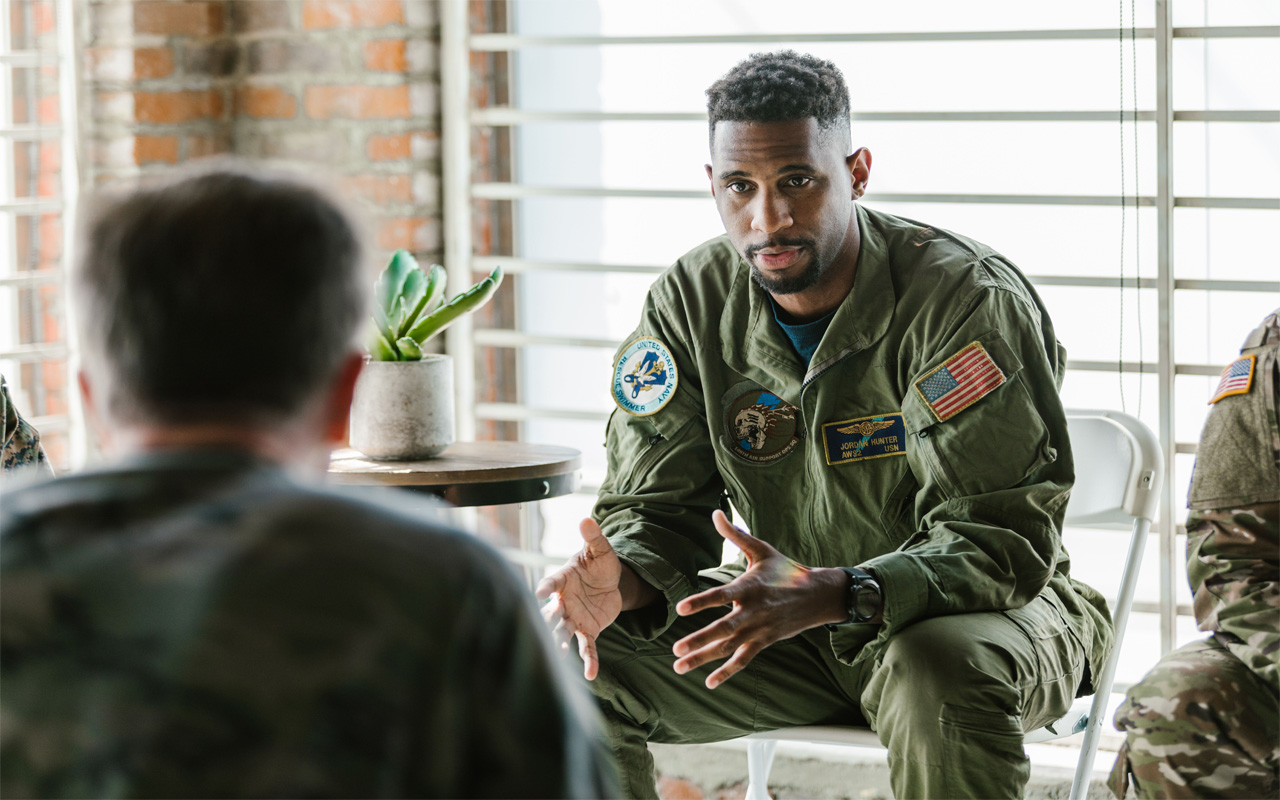
Nearly half of US military veterans struggle with the transition to civilian life, despite reporting greater career satisfaction and confidence than non-veterans. As the US marks Veterans Day, new Wells Fargo research highlights the need for better skills-based hiring, mentoring and career support.
Nearly half (49%) of US military veterans say their transition from military to civilian life was difficult, despite reporting greater career satisfaction, financial confidence and optimism about emerging technologies than non-veterans. New research from Wells Fargo, conducted by Morning Consult, reveals that 44% of veterans are very satisfied with their career progress, compared with 32% of non-veterans. Veterans are also more optimistic about artificial intelligence, with 58% expressing confidence about its future impact, compared with 46% of those without military experience.
However, the findings expose an important challenge: many veterans struggle to translate their military experience into civilian job qualifications, potentially limiting their access to suitable career opportunities. The survey of 4,000 US adults, including 2,000 veterans and 2,000 non-veterans, raises questions about whether employers are doing enough to recognise transferable military skills and support former service personnel in building sustainable careers. The findings come as the United States marks Veterans Day on Wednesday 11 November 2026, honouring those who have served in its armed forces.
HALF STRUGGLE WITH TRANSITION TO CIVILIAN LIFE
One of the most significant findings is that 49% of veterans describe their transition from military to civilian life as difficult. Those who experienced a challenging transition also reported lower career satisfaction, reduced financial confidence and greater concerns about job security than veterans whose transitions were easier.
For some former service personnel, adjusting to a new professional environment can involve navigating unfamiliar recruitment processes, understanding civilian workplace expectations and identifying career opportunities that make use of their existing capabilities. Military service can provide experience in leadership, teamwork, problem-solving, adaptability and working under pressure.
However, these skills may not always translate easily into the language and qualifications employers use when recruiting. The research found that 16% of veterans reported difficulty translating their previous experience into civilian job qualifications, compared with 7% of non-veterans. This highlights a potential mismatch between the capabilities veterans possess and the ways employers assess their suitability for civilian roles.
Commenting on the findings, Sean Passmore, Head of Enterprise Military and Veteran Initiatives, Neurodiversity, and Disability Employment Strategy at Wells Fargo, said: “Veterans bring resilience, leadership and adaptability that continue to create value long after military service ends. Our research shows veterans report strong career satisfaction and financial confidence and view themselves as ready to embrace emerging technology. At the same time, the findings reinforce the important role employers can play in helping veterans translate their military experience into meaningful civilian careers.”
SKILLS-BASED HIRING
The research reveals that veterans place considerable importance on how employers recruit, develop and support military-connected talent. Some 82% say skills-based hiring practices influence their choice of employer, while an equal proportion value programmes supporting veterans and military spouses. Another 75% consider apprenticeships or on-the-job training opportunities important when deciding where to work.
These findings suggest that employers may benefit from reviewing recruitment practices that rely heavily on conventional job titles, sector-specific qualifications or traditional career pathways. Military experience may involve responsibilities comparable to those of civilian managers, operations specialists, technical professionals and project leaders, but the terminology used to describe these roles can differ significantly.
MENTORING – KEY TO SUCCESS
Recruitment processes that focus on demonstrable skills, experience and potential could help ensure that veterans are not overlooked simply because their professional backgrounds differ from conventional corporate career paths. Mentoring is another important factor. The Wells Fargo survey found that 40% of veterans say a mentor positively influenced their career, compared with 28% of non-veterans.
Meanwhile, 36% of veterans define career success through leadership opportunities, compared with 23% of non-veterans. Together, the findings highlight the value of structured onboarding, mentoring, professional networks and leadership development in helping former service personnel navigate civilian workplaces.
The importance of supporting non-traditional career pathways has previously been explored by Fair Play Talks. In an earlier interview with FDM Group’s former Chief People Officer Paula Leach, she highlighted the experiences of former military personnel successfully transitioning into civilian working lives, alongside the importance of creating opportunities for people from different professional backgrounds. For employers, the challenge is not simply recruiting veterans but ensuring they have the support and opportunities needed to progress.
VETERANS REPORT GREATER CAREER SATISFACTION
Despite the challenges associated with leaving military service, the research reveals a more positive picture of career satisfaction among veterans overall. Some 81% of veterans report being at least somewhat satisfied with their careers, compared with 71% of non-veterans.
Meanwhile, 44% are very satisfied with their career progress, compared with 32% of those without military experience. The findings suggest that many veterans are successfully building rewarding civilian careers, even though the transition itself may have been difficult.
For businesses, this reinforces the importance of recognising veterans’ potential for long-term contribution rather than focusing exclusively on their initial adjustment to civilian employment. It also highlights why career development, mentoring and progression should be part of employers’ veteran recruitment strategies.
STRONGER FINANCIAL CONFIDENCE DESPITE CHALLENGES
The Wells Fargo survey also found that veterans report greater confidence in achieving several financial goals. More than a third (35%) are very confident about achieving financial security and peace of mind, compared with 21% of non-veterans. Other findings show that:
- 52% of veterans are very confident about achieving homeownership, compared with 40% of non-veterans.
- 48% are confident about leaving a financial legacy, compared with 34% of non-veterans.
- 33% say their finances are better than a year ago, compared with 28% of non-veterans.
- 30% are very confident about reaching their long-term financial goals, compared with 25% of non-veterans.
- 21% report experiencing a great deal of financial stress, compared with 27% of non-veterans.
However, these findings should not obscure the difficulties experienced by veterans whose transitions into civilian life were more challenging. The research found that these individuals tended to report lower financial confidence and greater uncertainty about their employment prospects. This reinforces the importance of providing support during critical career transitions, including employment guidance, financial education and opportunities for sustainable work.
VETERANS MORE OPTIMISTIC ABOUT AI AND FUTURE TECH
Another striking finding is that veterans report greater optimism about artificial intelligence and emerging technologies than non-veterans. Some 58% of veterans are optimistic about AI’s impact on their future, compared with 46% of non-veterans. Nearly half (48%) also believe AI will positively affect society, compared with 35% of non-veterans.
Among employed respondents, veterans also report greater confidence using AI tools:
- 32% of employed veterans are very confident using AI at work, compared with 22% of employed non-veterans.
- 37% say their employer provides AI training, compared with 24% of employed non-veterans.
The findings challenge assumptions that military experience necessarily creates barriers to adapting to technologically evolving workplaces. Instead, the veterans surveyed reported considerable confidence about emerging technologies and their potential impact. However, access to training remains important as employers introduce AI and change the skills required for different roles. Earlier research revealed that 87% of UK workers considered skills-based experience more important than a degree when applying for jobs.
Although the studies examine different populations, both point to the growing importance of practical capabilities and workplace learning. For veterans, skills-based recruitment and access to technological training may be particularly valuable in opening opportunities across new industries.
COMPETITIVE PAY AND PURPOSE MATTER
The Wells Fargo research also highlights the importance of financial rewards and meaningful work in veterans’ career decisions. Some 59% of veterans consider competitive pay very important when selecting an employer, while 53% say they would accept lower pay for work they consider more meaningful.
The findings suggest that veterans, like other employees, may balance financial considerations with the desire for professional purpose, career satisfaction and opportunities to contribute. For employers, providing meaningful responsibilities should therefore complement rather than replace fair compensation, career progression and supportive workplace policies.
SUPPORTING VETERANS INTO CIVILIAN EMPLOYMENT
The Wells Fargo findings coincide with a new employment initiative from workforce development organisation America Works, designed to help veterans secure sustainable civilian careers, including those experiencing homelessness or housing instability. Working with the New York City Human Resources Administration, America Works New York announced its From Service to Success career fair and Veterans Day tribute for Monday 9 November 2026.
The initiative aims to connect veterans with employers while encouraging recruitment practices that recognise transferable military experience. “Veterans bring valuable experience, leadership, and a strong commitment to their work, but connecting that experience to civilian career opportunities is not always linear,” said Dr Lee Bowes, CEO of America Works.
The organisation emphasised that employers should assess veterans’ skills and potential rather than relying exclusively on military job titles. Its wider employment initiatives combine job placement, employer partnerships and individualised support to help veterans overcome barriers to finding and keeping work.
The approach also recognises that employment services need to complement other forms of assistance, particularly for veterans experiencing housing insecurity or financial hardship. The initiative demonstrates how employers and workforce development organisations can work together to create practical pathways into civilian employment.
EMPLOYERS RECOGNISED FOR SUPPORTING VETERANS
There is growing recognition of organisations developing recruitment and workplace inclusion programmes specifically for former military personnel. Previous coverage of the VERCIDA Employer Excellence Awards highlighted Lloyd’s, Sage, Thales and TransPennine Express as finalists in the Veterans Champion category. The category recognised employers demonstrating a commitment to supporting military-connected talent.
Meanwhile, previous reports illustrate how 12 US military veterans launched a technology platform designed to strengthen workplace diversity and inclusion skills. The initiative illustrated how veterans’ experiences of leadership, teamwork and working with diverse groups can contribute to business innovation and organisational development.
These examples underline the importance of recognising veterans not simply as a group requiring employment support, but as individuals with valuable skills, experience and potential to contribute across industries.
VETERANS DAY 2026: HONOURING SERVICE AND SUPPORTING CAREERS
The findings come as the United States marks Veterans Day on Wednesday 11 November 2026, honouring those who have served in its armed forces. Originally established as Armistice Day to commemorate the end of fighting in the First World War in 1918, the observance was renamed Veterans Day in 1954 to recognise American veterans of all wars.
The national ceremony takes place at Arlington National Cemetery, beginning with a wreath-laying at the Tomb of the Unknowns at 11am. This year’s commemorations also coincide with the United States’ 250th anniversary, reflected in the Department of Veterans Affairs’ official Veterans Day poster.
While Veterans Day recognises military service and sacrifice, the latest employment findings highlight the importance of ensuring that appreciation also translates into practical career opportunities. For businesses, that means recognising transferable military experience, removing unnecessary recruitment barriers and supporting veterans throughout their civilian careers.
WHAT EMPLOYERS SHOULD DO NEXT
The findings highlight several practical actions employers can take to improve recruitment, retention and professional development for veterans.
1. Recognise transferable military skills
Review job descriptions and recruitment criteria to ensure they assess relevant capabilities rather than relying exclusively on civilian qualifications or sector-specific experience. Military experience in leadership, logistics, technology, operations and team management may translate into a wide range of civilian roles.
2. Make recruitment more accessible
Provide clear information about job requirements, avoid unnecessary jargon and give veterans opportunities to explain how their experience relates to the position. Skills-based assessments can help employers identify capabilities that may not be immediately obvious from a conventional CV.
3. Provide structured transition support
Tailored onboarding, career coaching, buddy schemes and workplace guidance can help veterans navigate unfamiliar professional environments and build confidence.
4. Invest in mentoring and leadership development
Create opportunities for veterans to build professional networks, develop industry-specific knowledge and progress into leadership positions.
5. Expand training and apprenticeships
Ensure veterans can access professional qualifications, practical training and opportunities to develop skills in emerging technologies, including artificial intelligence.
6. Support military spouses and families
Consider flexible working arrangements, career support and benefits that recognise the potential effects of relocation, family responsibilities and changes in employment circumstances.
7. Address wider wellbeing and financial needs
Recognise that career transitions can intersect with financial uncertainty, housing insecurity and health concerns. Provide appropriate support and referrals without making assumptions about individuals’ circumstances.
8. Measure retention and career progression
Assess whether veterans are remaining in employment, progressing professionally and accessing development opportunities, rather than measuring success solely by recruitment numbers.
RECOGNITION MUST EXTEND BEYOND VETERANS DAY
The Wells Fargo findings highlight an important contradiction in veterans’ experiences of civilian employment. Although nearly half report difficulties transitioning from military to civilian life, veterans overall express greater career satisfaction, financial confidence and optimism about emerging technologies than non-veterans.
This suggests that many former service personnel have the capabilities and confidence to succeed in civilian careers, but may encounter barriers when translating those strengths into opportunities. For employers, the challenge is to ensure recruitment practices, career development programmes and workplace cultures recognise military experience as a valuable source of talent. Supporting veterans should not be limited to annual recognition events or targeted recruitment campaigns.
It should involve sustained investment in fair access to employment, mentoring, professional development and long-term career progression. Ultimately, honouring veterans in the workplace means not only recognising their service, but ensuring they have meaningful opportunities to succeed in the careers that follow.
For more information about the America Works veteran hiring initiative and the Department of Veterans Affairs’ Veterans Day 2026 commemorations, click here.
RELATED ARTICLES
Twelve diverse US military veterans have unveiled an interactive app to help organisations accelerate diversity and inclusion learning.
Paralyzed Veterans of America (PVA) has petitioned the US Department of Transportation (DOT) to improve air travel for passengers with disabilities.
A new report warns that federal rollbacks of diversity, equity and inclusion (DEI) policies introduced earlier this year have sparked deep anxiety amongst women and minority civil servants.