








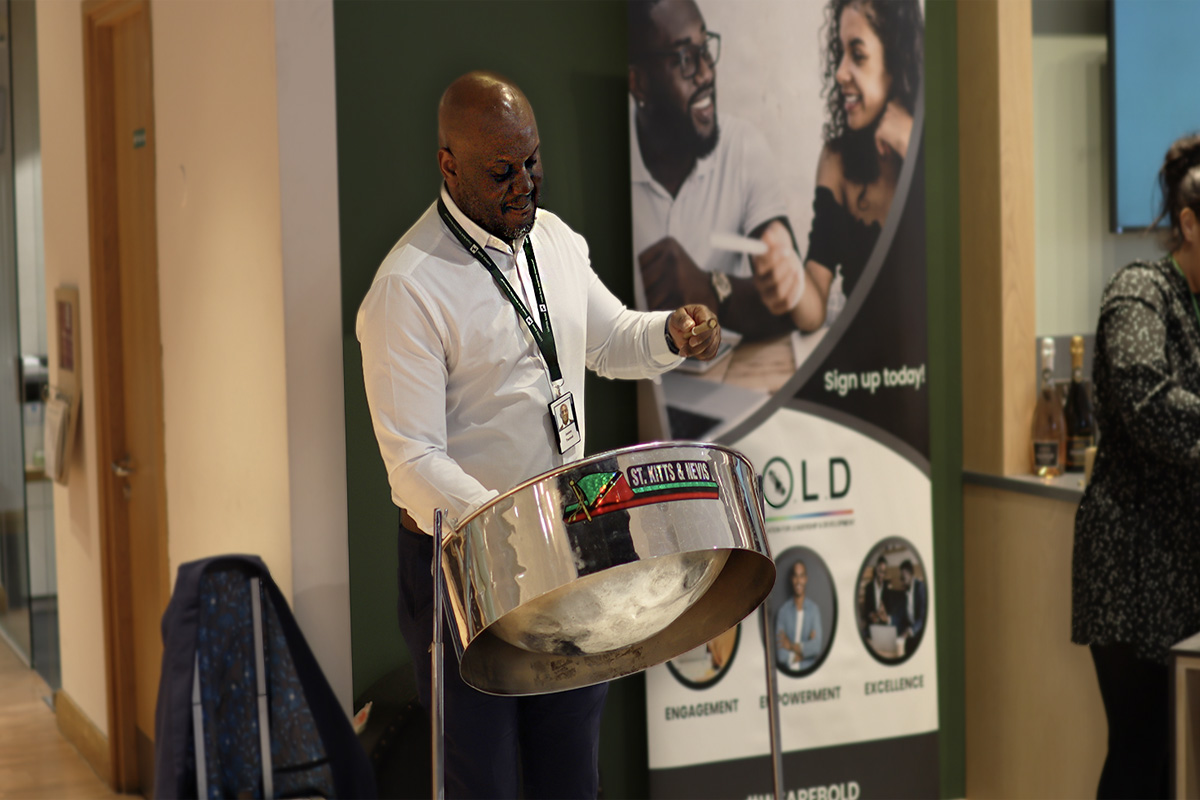
Lloyds Banking Group’s Philip Hocking explores how employee resource groups can go beyond events and awareness to create connections, uncover talent, develop future leaders and open up opportunities.
When I joined Lloyds Banking Group, I found the scale of the organisation overwhelming. I was trying to understand how everything fitted together: who I should speak to, where I should go for help, how I should navigate the organisation and, frankly, how I should be within it.
Coming from a very different professional background, there were days when I genuinely wasn’t sure who I needed to ask for help or whether I was even asking the right questions. Some of the people who made the biggest difference during that period weren’t helping me because it was part of their job.
They were colleagues who volunteered their time to support other people. That made a lasting impression on me. My own journey into employee resource groups (ERGs) or employee networks began with something equally simple – a colleague made an introduction. It was just a seed.
BOLD BEGINNINGS
Over the following months, I became increasingly involved, met more people and found ways to contribute. Before long, that one introduction had become regular involvement in the BOLD, Lloyds Banking Group’s Black Organisation for Leadership and Development network, and the beginning of my own adventure in side-of-desk volunteering.
Eventually, I had the opportunity to help build and lead BOLD Birmingham. Being able to help others find their own way in the same way has meant a great deal to me. It has also made me think differently about what employee resource groups actually make possible.
When we launched BOLD Birmingham in April 2024, our ambition was to bring the network closer to colleagues in the region and create a community that reflected the people within it. In our most recent award period alone, BOLD Birmingham led five major events and supported a sixth, reaching more than 445 colleagues and guests and generating over 500 volunteer hours. Those figures matter. But my own experience tells me that something much smaller can have an enormous impact.
A colleague gives up some time. Somebody makes an introduction. A person walks into a room where they don’t know anybody. A conversation starts. Several months later, they might be the person volunteering their own time to help somebody else. That’s why I’ve become increasingly interested in a harder measure of ERG success: What happened because somebody took part?
GIVING PEOPLE THE SPACE TO SHINE
We talk a lot about enabling colleagues to bring their authentic selves to work. Sometimes achieving that doesn’t require an elaborate programme. Sometimes you simply need to give people a platform. One of my favourite things about BOLD Birmingham has been watching colleagues find space for talents their everyday roles might never reveal.
Someone with event-management experience can lead an event. Someone whose mind naturally goes to risk can scrutinise supplier arrangements. Others can build relationships with local businesses or take responsibility for event photography. And somebody who can really hit that note can get on stage and sing.
These might sound like small examples. I think they’re fundamental. Instead of a small committee designing something for colleagues, people become part of creating it. They take ownership, contribute something of themselves and demonstrate capabilities to people who may never otherwise have seen them. The organisation gets a glimpse of the person beyond their job description. That is authenticity made practical. It is also talent development.
CREATING PROXIMITY TO OPPORTUNITY
One of BOLD Birmingham’s pillars has been working with Community Bank, our branch network. In an organisation as large as ours, talented people can spend their working lives in one part of the business without naturally encountering colleagues working in very different areas or at different levels.
Our events create those connecting moments. A branch colleague can find themselves sharing a room and a conversation with somebody from a different business area, a senior leader, a potential mentor or somebody doing a job they didn’t know existed. There doesn’t need to be a formal career intervention attached to every conversation. Sometimes the value is simply reducing the distance between people.
For colleagues who haven’t arrived with an established professional network, those informal connections can be particularly important. I certainly benefited from them myself. Many of us learn how organisations work through people rather than process maps. ERGs can provide access to relationships, visibility and insight that might otherwise take years to build, helping talented people navigate opportunities they may never have known existed.
A colleague I now mentor was originally introduced to me by a bank manager in Birmingham. We bonded over something completely unrelated to work – our shared love of football. From that first conversation, I’ve had the privilege of watching him grow and develop.
STRETCH OPPORTUNITIES
Last year, we gave him the opportunity to run and host one of our events. It was deliberately a stretch opportunity, but I don’t believe stretch should mean leaving somebody to sink or swim. We made sure there was a supportive team around him. He had the freedom to take the event in the direction he thought was right, while knowing people were there if he needed support. He excelled. He has since made the leap from Community Bank into Corporate and is flying.
His success belongs to him. BOLD didn’t create his talent. It helped create another place for that talent to be seen. That’s important because opportunity isn’t only the vacancy that eventually appears on an internal jobs board.
There is an ecosystem around opportunity. It includes knowing that a role exists, understanding what it involves, meeting somebody who has done it, having somebody encourage you to apply, demonstrating a capability outside your existing remit, or simply becoming visible beyond your immediate organisational circle. ERGs can create that proximity.
MORE THAN JUST EVENTS
Of course, the events themselves still matter. Our Black Hair Experience, for example, brought together more than 100 people alongside Black barbers and braiders, local businesses, lived-experience storytelling and discussion of the cultural and historical context surrounding Black hair.
But even there, attendance only tells part of the story. What walked out of the room? A new relationship. An idea. A mentor. Greater confidence. Knowledge of another career. A future collaborator. A better understanding of somebody else’s experience. Or simply the feeling that a huge organisation had become slightly smaller and more accessible.
The same principle applies to the volunteers creating those experiences. ERG leadership asks people to influence colleagues they don’t manage, engage senior stakeholders, manage competing priorities, work with suppliers, understand risk, organise projects, manage budgets and communicate with large audiences.
LEADERSHIP PRACTICE
In many ways, ERGs become places where people get to practise leadership before anybody formally gives them permission. I certainly didn’t become involved because I thought I was joining a career-development programme. But it has developed me. It has increased my confidence, expanded my network and allowed me to lead, influence and communicate beyond the boundaries of my formal role.
The work has also brought external recognition, which is always encouraging. But what interests me far more is the evidence sitting underneath that recognition: people who discovered new opportunities, developed new skills, expanded their networks or found the confidence to contribute in ways they hadn’t previously considered. Those outcomes matter more than any award ever could.
It is one reason initiatives such as the Employee Network Awards matter: they shine a light on work that is often undertaken quietly, alongside people’s day jobs, but can have an impact well beyond the network itself.
A MODEL FOR EFFECTIVE EMPLOYEE COMMUNITIES
I’m immensely proud of what we’ve built in Birmingham, but BOLD shouldn’t be special in this respect. This isn’t fundamentally a model for a Black employee network. It’s a model for building effective employee communities.
Start by representing the community and understanding what people actually want rather than deciding for them what an ERG should provide. Give people meaningful ways to participate rather than simply asking them to consume what a committee creates.
Bring allies into those spaces. Find sponsors who can amplify voices, provide access and help remove barriers. Then develop the structures and resources that keep everything knitted together, so success doesn’t depend entirely on a handful of enthusiastic volunteers.
OPPORTUNITIES TO PARTICIPATE
The needs of each community will naturally differ. A neurodiversity network might focus on workplace design, communication or adjustments. A faith network will represent different experiences and needs. A network supporting women returning to work might concentrate on rebuilding confidence, connections and career momentum.
The needs differ. The architecture can be remarkably similar. Represent. Listen. Create opportunities to participate. Connect people. Bring in allies and sponsors. Give people somewhere to demonstrate what they can do.
An effective ERG shouldn’t become an island within an organisation. Its purpose is almost the opposite. It builds bridges between people who might otherwise remain separated by function, geography, hierarchy or experience.
MEASURING WHAT IS POSSIBLE
That brings me back to measurement. Five major events. A sixth supported. More than 445 colleagues and guests reached. Over 500 volunteer hours. Those figures tell us something about BOLD Birmingham.
But I’d like us to become better at measuring something else. How many people tried something for the first time? How many demonstrated a talent their manager had never seen? How many met somebody outside their normal organisational world? How many subsequently found a mentor, applied for an opportunity or took on a stretch assignment? How many discovered they had something valuable to contribute because somebody trusted them enough to let them try?
ERGs cannot solve structural inequalities by themselves, and inclusion cannot be delegated to employee volunteers. But they can create the conditions in which people connect, experiment, contribute and grow. I know that because I spent much of my first year trying to work out who to talk to, where I fitted and how the organisation actually worked. Somebody volunteered their time. Somebody else made an introduction. At the time, it didn’t feel particularly significant. It was just a seed.
BELONGING MATTERS
Several months later, I was volunteering myself. Years later, I’ve had the privilege of helping create opportunities for other people to do the same. That’s the potential cycle. You don’t create community simply by telling people they belong. You create the conditions in which people can participate, contribute and connect, and belonging becomes one of the outcomes.
So my challenge to organisations isn’t simply to ask: “Do we have an employee resource group?” but instead: “What becomes possible because we have one?”
Who found their voice? Who discovered an opportunity? Who made a connection? Who was trusted to lead? Who showed us a talent we didn’t know they had? And perhaps most importantly, who got the chance to be more of themselves at work because somebody gave them the platform?
This guest column was created in partnership with Lloyd’s Banking Group’s Philip Hocking.
ABOUT THE AUTHOR
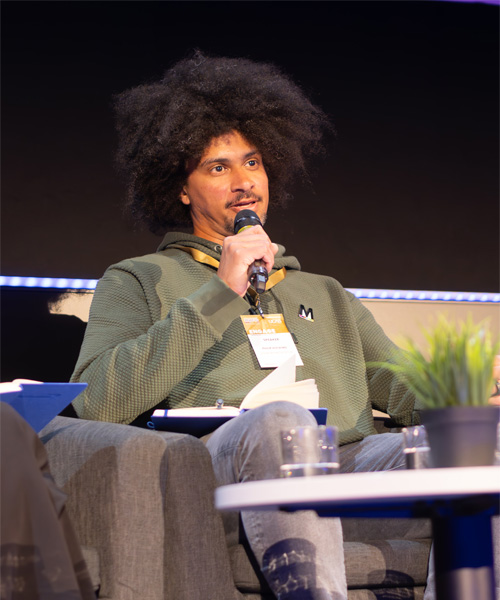
Philip Hocking is the Regional Lead for the Black Organisation for Leadership & Development (BOLD) at Lloyds Banking Group. He is also a Senior Analyst and is transitioning into the role of Next Generation Talent Consultant. Already recognised with several awards, Philip is a finalist in the 2026 Ethnicity Awards in the Exceptional Inclusion category, finalist at the 2026 European Diversity Awards (Gamechanger Category) and finalist at the 2026 Express & Star Black Country Heroes Awards, as well as a finalist for Role Model of the Year at the 2026 CCC Awards.
RELATED ARTICLES
Employee networks and inclusion leaders working behind the scenes to create fairer, more inclusive workplaces have been recognised at the Employee Network Awards 2026.
The importance of visible role models and the role organisations can play in creating more meaningful opportunities for Black talent.
As the UK marks National Inclusion Week 2026 from 14–20 September, organisations are being encouraged to build trust. But psychological safety isn’t created through a week long campaign, it’s built every day.
The shortlist for the 2026 Ethnicity Awards has been announced, recognising individuals, employers and organisations across the UK for their contribution to promoting ethnic diversity, inclusion and representation in business and society.