












From championing gender equality to challenging racism, supporting LGBTQ+ and disabled colleagues, and promoting men’s mental health, International Men’s Day 2026 celebrates men making a positive difference. As more than 250 male champions and nominees gain global recognition, advocates are encouraging more men to use their influence to create fairer, healthier and more inclusive workplaces.
As the world marks International Men’s Day 2026 on 19 November, it’s an opportunity to celebrate men who are making a positive difference in their workplaces, families and communities. From championing women’s careers and challenging discrimination to supporting colleagues’ mental health and opening doors for underrepresented talent, positive male role models are helping change what leadership and allyship look like.
This year’s global International Men’s Day theme, The Future Is Everyone, encourages people to work together to create a better future. In the UK, the theme Supporting Men and Boys focuses on improving men’s wellbeing, recognising their contributions and encouraging healthier conversations about masculinity. Both messages highlight an important point: supporting men and advancing equality should not be competing goals.
One initiative celebrating male allyship is the 2026 Break the Ceiling Touch the Sky Global Male Champions for Gender Equality, organised by House of Rose Professional (HORP). The programme highlights male executives and advocates working to advance women’s leadership, challenge barriers and build more gender-balanced organisations. This year’s initiative began with more than 250 nominees, drawing on research involving over 6,500 male executives from more than 800 companies worldwide. It provides an opportunity to celebrate men who use their positions and influence to help others succeed, while encouraging more men to become active allies.
CELEBRATING POSITIVE MALE ROLE MODELS
International Men’s Day isn’t just about celebrating men in senior leadership positions. It’s also about recognising everyday role models: fathers, carers, teachers, colleagues, managers, community leaders and volunteers who support others and help create positive change. As Fair Play Talks explored in its previous International Men’s Day coverage, the day provides an opportunity to challenge harmful stereotypes, recognise men’s contributions and promote healthier relationships between men and women.
It also celebrates the diversity of men. Men of different ages, ethnicities, backgrounds, abilities and identities can face different challenges, from workplace discrimination and social expectations to mental health difficulties and barriers to accessing support. Positive male role models can help challenge the idea that men must always be strong, successful or self-reliant.
They can show that leadership also means listening, supporting others, admitting mistakes and knowing when to ask for help. Equally, they can help create workplaces where people feel comfortable challenging unfairness and supporting colleagues whose experiences differ from their own.
MORE THAN 250 MEN HIGHLIGHTED FOR ADVANCING GENDER EQUALITY
House of Rose Professional’s 2026 Global Male Champions for Gender Equality initiative highlights men advocating for women’s advancement and gender-balanced leadership across business. Announced in April, the programme has recognised champions through international leadership events, including the Break the Ceiling Touch the Sky World Edition in Singapore on 12 October. The initiative considers five factors when identifying male champions:
- Active and visible advocacy for gender equality.
- Influence across industries and organisations.
- Commitment to advancing high-performing women into leadership.
- Support for women’s professional development and external learning.
- Investment in policies and practices that build gender-balanced teams.
Its published nominees include leaders associated with Prudential, Microsoft, Accenture, Amazon Web Services, Bayer, UPS, BIC, Wella Company, DFI Retail Group, Procter & Gamble and many other global organisations. Among those highlighted are Anil Wadhwani, Scott Price, Bob McDonald, Arvind Mathur, Paul Prendergast, Vukani Mngxati, Max Amen, Peter Van den Broeck and Harish Sadani. They represent different approaches to allyship, from promoting women’s advancement within large organisations to challenging gender stereotypes and supporting broader social change.
The programme builds on HORP’s efforts to encourage more men to become advocates for equality. As Fair Play Talks reported in 2025, last year’s Global Male Champions initiative recognised more than 200 executives for their advocacy and efforts to advance women’s leadership. The 2026 programme forms part of HORP’s wider Mission 2029 for a Better World, which aims to increase women’s representation in corporate leadership and encourage more male leaders to support gender equality.
According to HORP, there is no entry or nomination fee associated with the champions list. Any additional contribution to its wider leadership initiatives is voluntary. The full published 2026 nominees list appears at the end of this article.
WHY MALE ALLYSHIP MATTERS
Men continue to hold most senior leadership positions in the world’s largest companies. According to the 2026 Break the Ceiling Touch the Sky 101 Global Index, just 31 of the world’s 500 largest companies were led by women entering 2026. That represents only 6.2%, leaving nearly 94% led by men. For organisations seeking greater gender balance, male leaders therefore have an important role in opening doors and removing barriers. They often influence recruitment, promotions, succession planning, access to professional networks and decisions about who receives opportunities to progress.
Their support can make a difference when it goes beyond encouragement to meaningful action. That includes mentoring and sponsoring women, recommending them for influential projects, challenging bias and making sure female colleagues receive recognition for their achievements. But male allyship isn’t limited to senior executives. Managers and colleagues can also make a difference by speaking up when they witness discrimination, listening to other people’s experiences and challenging assumptions about who should lead.
Research suggests that men who practise allyship can benefit personally and professionally. As previously reported, a study found that only 37% of men surveyed actively engaged as workplace allies. Yet 97% of those practising allyship reported improvements in their leadership skills and personal development. The findings suggest that supporting others can help men develop greater empathy, confidence and inclusive leadership skills.
MALE ALLYSHIP IN ACTION IN THE UK
In the UK, Lee Chambers, Founder and CEO of Male Allies UK, is encouraging more men to become active advocates for gender equality through workplace training, leadership development and practical allyship initiatives. The organisation works with businesses to help men understand gender inequality, challenge workplace bias and build the confidence to become effective allies. Chambers was recently recognised among Workplace Belonging Week 2026’s changemakers for his contribution to inclusive leadership and workplace belonging. He was also featured in Fair Play Talks’ 2026 Black Changemakers list, recognising people creating opportunities and challenging inequality across workplaces and communities.
Commenting on research into male allyship previously covered by Fair Play Talks, Chambers warned: “We are in a pivotal time where division is increasing, and resistant voices feel emboldened to challenge.” He believes men need opportunities to explore difficult conversations, understand what motivates change and develop the confidence to challenge inequality.
Chambers reinforced this message in Fair Play Talks’ International Women’s Day 2026 feature: “Gender equality has never been a zero sum game.” He argued that progress depends on people working together rather than treating women’s advancement and men’s opportunities as opposing interests.
Robert Baker, Founder of Potentia Talent Consulting, has similarly called for greater employer investment in male allyship. Commenting on the same workplace allyship research, Baker highlighted the importance of giving men safe spaces to discuss their views, understand the benefits of inclusion and develop the confidence to challenge unfairness. He also emphasised the need for leadership support, practical education and a clear organisational commitment to making allyship a priority. Both perspectives highlight why men should be actively included in conversations about workplace equality rather than being treated as observers or obstacles to change.
MALE ALLYSHIP MUST EXTEND BEYOND GENDER
Male allyship isn’t just about supporting women. Men also have an important role in challenging racism, supporting LGBTQ+ colleagues, improving disability and neurodiversity inclusion, and helping people from disadvantaged backgrounds access opportunities. And given who still holds many of the most powerful positions in business, their involvement matters.
According to the 2025 Women’s Power Gap study, 77.2% of S&P 500 CEOs in the US were white men as of April 2025. Black men accounted for just 1.6% of CEOs, while Hispanic men represented 3.4%. No Black or Hispanic women held CEO positions within the index at the time of the study. These figures highlight why those already holding senior positions have an opportunity to help others overcome barriers to leadership.
Research also suggests that men who practise allyship are supporting colleagues across several underrepresented groups. As previously reported, among the male allies participating in a workplace inclusion study:
- 96% advocated for women.
- 81% supported colleagues from different ethnic backgrounds.
- 77% supported LGBTQ+ colleagues.
- 70% advocated for people from lower socioeconomic backgrounds.
- 69% supported neurodivergent colleagues.
- 66% supported colleagues across different age groups.
- 63% supported disabled colleagues.
- 58% identified as allies to other men.
- 55% supported non-binary people.
ALLYSHIP ACROSS COMMUNITIES
The figures demonstrate how allyship can extend across different communities, although the wider study also highlighted the relatively small proportion of men actively practising it. Robert Baker reinforced this broader approach in a Fair Play Talks feature marking International Allyship Day 2026. For Baker, meaningful allyship involves: “Using our social influence and power in the workplace to support those with less influence and power.”
That could mean a senior leader sponsoring a talented Black or Asian colleague, challenging discrimination against an LGBTQ+ employee, supporting appropriate adjustments for disabled workers or opening career opportunities to people without established professional networks. Earlier research also found that movements such as #MeToo, Time’s Up and Black Lives Matter had encouraged some male leaders to become more empathetic, collaborative and willing to speak up about gender and racial equality.
The challenge for employers is turning that willingness into meaningful action. Being a positive male role model means using your influence to support others, particularly those who may not have the same access, opportunities or voice.
GENDER BALANCE AND BUSINESS PERFORMANCE
House of Rose Professional’s research also suggests that companies with more gender-balanced leadership are more likely to report stronger business performance. Its 2026 BTC 101 Global Index found that:
- 73% of Index companies reported year-on-year revenue growth, compared with 60% of companies outside the Index.
- 52% reported profit growth, compared with 47% of non-Index companies.
- Among the 100 least gender-balanced companies outside the Index, only 48% reported revenue growth and 44% reported profit growth.
The findings show an association between gender-balanced leadership and financial performance, although they do not establish that having more women in leadership directly causes stronger results. As Fair Play Talks reported in March, the Index identifies organisations making progress towards gender-balanced leadership across their boards and executive teams.
Anthony A. Rose, Chairman and CEO of House of Rose Professional, believes male leaders have a particularly important part to play. He has argued that inclusive male leaders must take greater responsibility for helping businesses achieve gender balance alongside female role models. For employers, the wider message is that inclusive leadership and gender equality deserve serious attention. Male allies can help strengthen that work by challenging barriers, supporting talented colleagues and making fairer decision-making part of everyday business practice.
MALE ALLYSHIP ALSO MEANS SUPPORTING OTHER MEN
While male allyship often focuses on supporting women and underrepresented colleagues, International Men’s Day is also an opportunity to recognise the importance of men supporting one another. That includes challenging stigma around mental health, encouraging colleagues to seek help and recognising pressures men may face at work and beyond.
As Fair Play Talks reported during Men’s Health Week 2026, one in five Gen Z men had taken mental health leave, according to research from The Standard. The study suggested younger men are becoming more willing to seek support, although employers still need to address workplace pressures and provide appropriate help.
Positive male role models can make a difference by speaking openly about wellbeing, challenging outdated expectations and showing that asking for support is not a sign of weakness. Managers also have an important role in creating environments where colleagues feel comfortable discussing concerns without fear of judgement.
A workplace where men feel they must hide stress, avoid taking leave or cope alone is unlikely to support the wellbeing of its wider workforce. Men can help change that culture by checking in with colleagues, listening without judgement and encouraging those who are struggling to access appropriate support.
FATHERHOOD AND EQUAL PARENTING
Male allyship also starts at home. Fathers who share childcare responsibilities, challenge traditional parenting roles and support their partners’ careers can make an important contribution to gender equality. In the UK, Elliott Rae MBE, Founder of Parenting Out Loud, is helping change attitudes towards modern fatherhood and encouraging employers to better support working dads. Research published by Parenting Out Loud and YouGov ahead of Equal Parenting Week 2026 revealed a significant gap between how mothers and fathers experience parenting:
- 49% of dads believed parenting responsibilities were shared equally, compared with just 21% of mums.
- 72% of mothers said they carried more than 60% of parenting duties.
- 53% of mothers said parenting had negatively affected their careers, compared with 13% of fathers.
Commenting on the findings, Rae challenged traditional expectations about who should work and who should care. “The blame is on the system – one that tells dads to provide and mums to care.”
NORMALISING PATERNITY LEAVE
Through Parenting Out Loud, Equal Parenting Week and the Working Dads’ Summit, Rae is encouraging organisations to normalise paternity leave, flexible working and more equal sharing of caring responsibilities. As Fair Play Talks highlighted when celebrating men levelling the playing field in 2023, Rae has long championed modern fatherhood, men’s mental health and gender equality through initiatives including MusicFootballFatherhood.
More recently, he contributed to Fair Play Talks’ coverage of the challenges facing working parents and families, highlighting the importance of fathers taking an active role in supporting their children’s wellbeing. His work shows that positive male role models aren’t only those who champion equality in boardrooms.
They are also the fathers who take parental leave, share the mental load of parenting, challenge outdated expectations and make it easier for other men to do the same. When men feel supported to be active parents and carers, it benefits fathers, mothers, children and workplaces alike.
MEN’S HEALTH MUST REMAIN A WORKPLACE PRIORITY
International Men’s Day also takes place during Movember, which raises awareness of men’s physical and mental health, including prostate cancer, testicular cancer and suicide prevention. As Fair Play Talks highlighted earlier this month, employers have an opportunity to improve men’s health through better workplace cultures, earlier intervention and practical support. That includes encouraging conversations about mental health, making healthcare more accessible and ensuring employees can seek help without stigma.
Businesses have increasingly recognised the importance of providing male-specific health support. In 2022, Fair Play Talks reported that 35% of employers had invested in benefits specifically supporting men’s health, according to research by digital health provider Peppy. However, offering benefits is only part of the solution.
Men also need workplace cultures where they feel comfortable using them. That requires managers who listen, colleagues who support one another and organisations willing to address working conditions that may contribute to poor mental health. Supporting men’s wellbeing is another important form of allyship.
WHAT DOES MEANINGFUL MALE ALLYSHIP LOOK LIKE?
Being a male ally involves more than expressing support for equality or taking part in an awareness campaign. It means recognising where people face barriers and taking practical steps to help remove them. As Fair Play Talks explored on International Allyship Day 2026, meaningful allyship requires listening, challenging discrimination, sharing influence and helping people access opportunities. Men can demonstrate that commitment in different ways:
- Sponsor and mentor colleagues. Help talented women and employees from underrepresented backgrounds access networks, development opportunities and senior leadership roles.
- Challenge unfair behaviour. Speak up when colleagues face racism, sexism, ableism, homophobia, ageism or other forms of discrimination.
- Share opportunities and influence. Ensure people receive recognition for their work and have fair access to career progression.
- Support disability inclusion. Challenge assumptions about disabled and neurodivergent colleagues’ capabilities and advocate for accessible, supportive workplaces.
- Improve social mobility. Mentor people from disadvantaged backgrounds and challenge recruitment practices that favour established networks.
- Promote healthier workplace cultures. Challenge stereotypes about masculinity, flexibility, caring responsibilities and mental health.
- Support other men. Encourage colleagues to discuss their wellbeing and seek help when they need it.
- Lead by example. Demonstrate inclusive behaviours consistently rather than only during awareness campaigns.
The most effective allies recognise that they don’t have to speak for others or have all the answers. They need to listen, understand where support is needed and use their influence to help create change.
CELEBRATING THE DIFFERENCE MEN MAKE
The 2026 International Men’s Day theme, The Future Is Everyone, offers a timely reminder that building a fairer society requires people to work together. Supporting men and boys, promoting gender equality, improving opportunities for underrepresented groups and creating healthier workplaces are not separate ambitions. They are connected. House of Rose Professional’s Male Champions initiative highlights men using their leadership positions to support women’s advancement and more gender-balanced organisations.
Meanwhile, initiatives such as Male Allies UK demonstrate how men can become more actively involved in challenging inequality. And beyond the corporate world, positive male role models can be found throughout families, workplaces and communities. They are the managers who open doors for overlooked talent, the colleagues who challenge discrimination, the fathers who share parenting and caring responsibilities, and the men who encourage others to seek support when they’re struggling.
From championing women and supporting colleagues’ mental health to challenging racism, disability discrimination, LGBTQ+ exclusion and barriers to social mobility, positive male role models can help create fairer workplaces for everyone. This International Men’s Day, it’s worth celebrating not only what men achieve, but also the difference they make in the lives of others. Because being a positive male role model isn’t just about personal success. It’s about using your voice, influence and opportunities to help others succeed too.
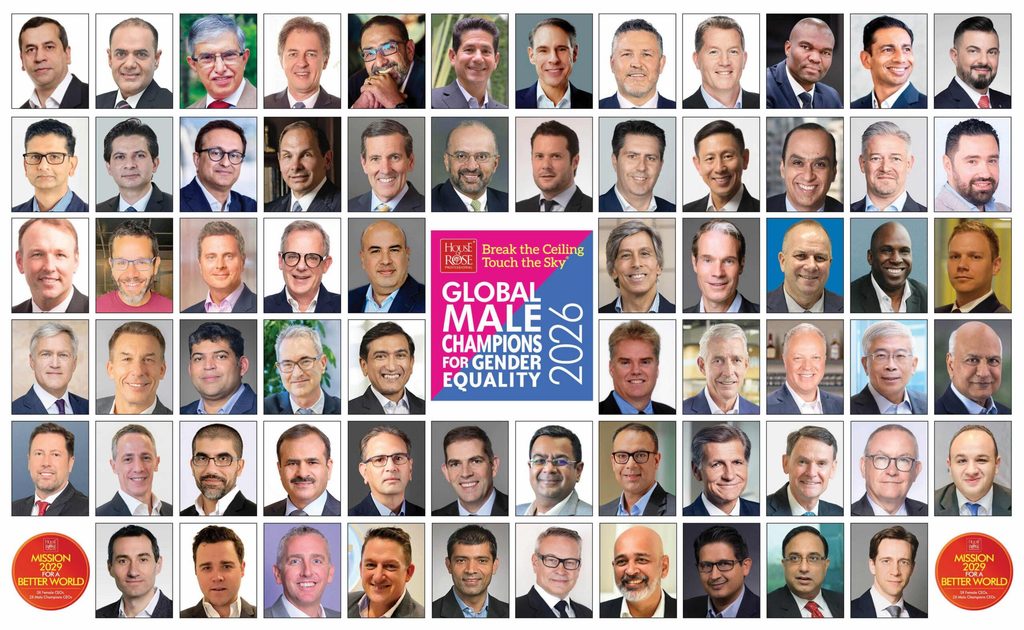
2026 GLOBAL MALE CHAMPIONS FOR GENDER EQUALITY
This year’s House of Rose Professional’s Male Champions for Gender Equality include (in alphabetical order):
A–D
- Aasif Malbari — Godrej
- Abbas Panju — Aramex
- Achal Agarwal — AVPN
- Adam Daniels — International Airlines Group
- Adrian McDonald — Dell
- Afnan Ahsan — IDS Borjomi International
- Ahmad Nasser — Hershey
- Ahmed Essam — Vodafone Group
- Akhil Shrivastava — The Estée Lauder Companies
- Alain Esseiva — Alpadis
- Alan Jope — Formerly Unilever
- Alex Von Behr — HORP
- Amer Afifi — Duracell
- Amit Banati — Fortune Brands Innovations
- Anders Opedal — Equinor
- Andreas Berger — Swiss Re
- Andrew Buckingham — The Coca-Cola Company
- Anil Wadhwani — Prudential plc
- Anthony Miller — Westpac Banking
- Antony Cahill — Visa
- Arvind Mathur — Amazon Web Services
- Ashwin Prasad — Tesco
- Austin Lally — Verisure
- Avinash Lakhan — Zurich Insurance Group
- Ayman Mokhtar — Viatris
- Bala Purushothaman — Procter & Gamble
- Bernard Fontana — Electricité de France
- Bijoy Sagar — Bayer
- Blas Maquivar — Mars
- Bob McDonald — Procter & Gamble
- Boon Chye Koh — Singtel
- Brendy Lange — Dow
- Brian Peters — Mr. Universe
- Bruce Broussard — HP
- Calvin J. Crosslin — Lenovo
- Caspar Herzberg — AVEVA
- Charles Bower — BowerGroupAsia
- Charles Woodburn — BAE Systems
- Charlie Nunn — Lloyds Banking Group
- Chester Twigg — Sellstorm
- Chris Nicholas — Sam’s Club
- Chris Peterson — Newell Brands
- Chris Raciti — ANZ
- Christian Bruch — Siemens Energy
- Christian Roejkjaer — Ikano (IKEA)
- Christophe Delenta — Sandoz
- Craig Bahner — Sara Lee Frozen Bakery
- Daniel Carrera — UPS
- Daniel H. Schulman — Verizon Communications
- David Furby — Chubb
- David Hanson — Starbucks
- David Rennie — Nestlé
- Dennis Tan — Prudential plc
- Derrick Goh — DBS Bank
- Ditlev Blicher — Maersk Group
- Donnie King — Tyson Foods
- Doug Wadleigh — Spin Master
- Douglas Mesquita Rocha — Mars
- Dr Thomas Schinecker — Roche Group
- Dr Tim Philippi — Singaporean-German Chamber of Industry and Commerce
E–H
- Earvin Young Jr — Sam’s Club
- Elbi Kremer — General Motors
- Enrique Patrickson — Triton Partners
- Eugene Willemsen — PepsiCo
- Fabio Weiss — DHL Global Forwarding
- Frank Morley — Northrop Grumman
- Frank van Loon — Burberry
- Frans Muller — Royal Ahold Delhaize
- Frederic de Wilde — Philip Morris International
- Frederic Guichard — Danone
- Gavin Graveson — Veolia Environnement
- Girish Wagh — Tata Motors
- Glenn Osaki — University of Southern California
- Greg Foran — Kroger
- Greg Hughes — Suntory Global Spirits
- Greg Johnson — McAfee
- Gregory Lukasik — Ecolab
- Guillermo Beade — SC Johnson
- Guillermo Frydman — Johnson & Johnson
- H. Fisk Johnson — SC Johnson
- Hannibal L. Blocker — Walmart
- Harish Sadani — Men Against Violence and Abuse (MAVA)
- Harish Mehta — Reliance Industries
- Husam Malki — Anantara Downtown Dubai Hotel
I–L
- Ian Stuart — HSBC Holdings
- Ismail Mapara — 3M
- Jacco van der Linden — The HEINEKEN Company
- Jaideep Malhotra — TD Synnex
- James D. Farley Jr — Ford Motor
- James Michael Lafferty — Katapult Digital
- Jan Meurer — Kenvue
- Jasjyot Singh — Lloyds Banking Group
- Jason M. Hollar — Cardinal Health
- Jason Sadler — Cigna
- Jean-Laurent Bonnafé — BNP Paribas
- Jens Rubbert — LBBW
- Jeremiah Kaplan — Johnson & Johnson
- Jeroen Temmerman — ghd
- Jerome Droesch — Cigna Healthcare International Health
- Jérôme Hénique — Orange
- Jérôme Toulza — Wella Company
- Jesper Brodin — Ingka Group
- Jim Fitterling — Dow
- Jim Stengel — Procter & Gamble
- Joachim Wenning — Munich Re Group
- Jochen Mueller — UPS
- John Murphy — The Coca-Cola Company
- John Murphy — U.S. Chamber of Commerce
- John Winter — Lloyds Banking Group
- Jon R. Moeller — Procter & Gamble
- Jonathan Kiman — Burberry
- José Toscano — Godrej
- Joshua Schulman — Burberry
- Joydeep Bose — Olam
- Julio Christian Lopez Marcos — The Coca-Cola Company
- Keith Farris — MISTRAS Group
- Ken Lee — DHL Express
- Kevin Zavaglia — Verizon
- Khai Peng Loh — Hewlett Packard Enterprise
- K.V. Rao — Tata International Singapore
- Liel Miranda — Alpargata
- Lim Him Chuan — DBS Singapore
- Ling Hai — Mastercard
- Luis Gallego Martín — International Airlines Group
- Luke Miels — GSK
- Lutz Schüler — Telefonica
- Lyndon Oliver — MetLife
M–P
- Manos Nikolakis — BIC Cello India
- Marc Carena — Mars Petcare
- Marc De Vellis — Spin Master
- Marc S. Pritchard — Procter & Gamble
- Mark FitzPatrick — St. James’s Place
- Mark Gillespie — Rentokil Initial
- Mark Hoplamazian — Hyatt Hotels Corporation
- Mark Tham — Accenture
- Mark Wiedman — PNC Financial Services Group
- Markus Kessler — UPS
- Markus Strobel — Coty
- Mathias Miedreich — ZF Friedrichshafen
- Matt Barresi — Kimberly-Clark
- Matt Codrington — Lenovo
- Matt Comyn — Commonwealth Bank of Australia
- Matthew Bouw — Cushman & Wakefield
- Max Amen — Wella Company
- Max Rangel — PetSafe Brands
- Maziar Mike Doustdar — Novo Nordisk
- Michael Hill — MISTRAS Group
- Michael Roberts — HSBC Holdings
- Michel A. Khalaf — MetLife
- Miguel Zaldivar — Hogan Lovells
- Mike Del Pozzo — PepsiCo
- Mike Motz — Walgreens Boots Alliance
- Mike Wirth — Chevron
- Miles Wilson — O’Brien Glass
- Mohit Anand — The Campbell’s Company
- Murray Auchincloss — BP
- Naïm Abou-Jaoudé — New York Life Investment Management
- Namal Nawana — DePuy Synthes
- Naveen Tahilyani — Prudential plc
- Nick Stone — Bupa
- Nicolas Hieronimus — L’Oréal
- Nik Jhangiani — Diageo
- Nik Mehta — British High Commissioner to Singapore
- Norris Wu — Eurofins
- Nuno Lopes Alves — Visa
- Ola Källenius — Mercedes-Benz Group
- Oliver Bäte — Allianz
- Olivier Blum — Schneider Electric
- Olivier Gavalda — Crédit Agricole
- Paolo Schira — Electrolux Professional Group
- Patrick Dupin — Saint-Gobain
- Patrick Pouyanné — TotalEnergies
- Paul McDonagh — QNB Group
- Paul Prendergast — Accenture
- Pedro Azagra — Iberdrola
- Pedro Matos Rosa — Johnson & Johnson
- Peter Harding — Suntory Beverages and Foods
- Peter Van den Broeck — BIC
- Philip Forrest — James Cook University Singapore
- Philipp Navratil — Nestlé
- Philippe Wahl — La Poste
- Pier Luigi Sigismondi — SATS
- Pierre Decroix — Suntory Beverages and Foods
- Pierre Palmieri — Société Générale
- Piyush Gupta — DBS Bank
- Prasad Sankaran — Cognizant
- Pravesh Saha — Wella Company
- Prosun Niyogi — Johnson & Johnson MedTech
R–S
- Rafael Lopez — Nestlé
- Raj Subramaniam — FedEx
- Rajesh Sethuraman — Godrej
- Ram Krishnan — Emerson
- Ranjeet Oak — Kohler
- Rajesh Achanta — Procter & Gamble
- Ranu Gupta — Performance Leverage
- Raymond Chun — Toronto-Dominion Bank
- Remy Ejel — Nestlé
- Reshamar R. Short — Kroger
- Richard Lutz — Deutsche Bahn
- Richard Saynor — Sandoz
- Robert Begbie — NatWest Group
- Robert M. Davis — Merck
- Robert Mikhael — Abbott
- Robert Peat — Cigna Healthcare
- Robin Vince — Bank of New York (BNY)
- Rodney Kinchington — BT Group
- Rodrigo Kede Lima — Microsoft
- Rohit Grover — The Hershey Company
- Rohit Jawa — Unilever
- Roland Busch — Siemens
- Ryan McCurdy — Lenovo
- Ryan McInerney — Visa
- Sachin Mirashi — Procter & Gamble
- Sam Balsara — Madison World
- Sammy Bousaba — FedEx Express
- Sandeep Seth — Tapestry International
- Sanjay Gupta — Google
- Sanjoy Sen — DBS Bank
- Sarthak Ranade — Johnson & Johnson Innovative Medicine
- Scott Price — DFI Retail Group
- Scott Thomson — Bank of Nova Scotia
- Sean Cook — Environmental Defense Fund
- Sean Doyle — British Airways
- Sekhar Krishnamoorthy — Help The Blind Foundation
- Seow Kee Gan — LNG Corporation
- Shahzeb Mahmood — The Clorox Company
- Shailesh Jejurikar — Procter & Gamble
- Shameel Joosub — Vodafone Group
- Shane Grant — Colgate-Palmolive
- Siddhartha Ghosal — Dow
- Simon Lowden — Woolworths Group
- Simon Roberts — J. Sainsbury
- Simon Trott — Rio Tinto Group
- Sören Seitz — Manulife
- Stanislav (Standa) Vecera — Procter & Gamble
- Stefaan Decraene — Rabobank Group
- Stefano Pessina — Walgreens Boots Alliance
- Steve J. Hill — General Motors
- Steve Okun — APAC Advisors
- Sudhir Sitapati — Godrej
- Sunil Gopinath — Albertsons
- Suresh Narayanan — Nestlé
- Sylvain Cazard — Broadcom
T–Y
- Tareq Muhmood — Visa
- Thomas Weigold — Sandoz
- Tian Chong Ng — Singtel
- Tim Smith — Johnson & Johnson MedTech
- Tim Love — Tim Love Ideas LLC
- Timotheus Höttges — Deutsche Telekom
- Timothy Sweeney — Liberty Mutual Insurance Group
- Tom Arseneault — BAE Systems
- Tony Del Rosario — The Coca-Cola Company
- Vasant Narasimhan — Novartis
- Victor G. Dodig — Canadian Imperial Bank of Commerce
- Victor Mills — Singapore International Chamber of Commerce
- Vijay Ratnaparkhe — Bosch
- Vijayanand Sinha — Reckitt
- Vikram Rao — Amazon Web Services
- Vincent Bourdil — Bureau Veritas
- Vinod Tahiliani — Jio-bp
- Vishnu Kalra — DePuy Synthes
- Vivek Gupta — United Breweries
- Vukani Mngxati — Microsoft
- Wael Sawan — Shell
- Walid Samara — Emerson
- Wee Ee Cheong — UOB
- Wern-Yuen Tan — Hillhouse Investment
- William Clay Ford Jr — Ford Motor
- William S. Demchak — PNC Financial Services Group
- William T. Winters — Standard Chartered
- Wojciech Bajda — Amazon Web Services
- Yasser Shaker — Orange
Check out House of Rose Professional – Male Champions for Gender Equality 2026 for the full list.
RELATED ARTICLES
From delayed diagnoses and mental health struggles to lost income and caring pressures, Movember’s international research shows that men’s health is not simply a personal issue. This Movember, Fair Play Talks compares the evidence and explores why workplaces can play a critical role in prevention, early intervention and support.
As organisations mark International Allyship Day on 8 August, inclusion and leadership experts say employers need to move beyond good intentions and make allyship part of everyday workplace culture.
As Men’s Health Week in the UK and US highlights growing concerns around men’s wellbeing, experts say employers must do more to challenge outdated assumptions about men’s mental health, address workplace stress and create environments where employees feel safe seeking support.
Despite increasing discussions around the importance of male allyship on workplace inclusion, only 37% of men actively step up as allies, a new study has revealed.
2025’s Break the ceiling touch the sky Global Male Champions for Gender Equality have been revealed.
New research ahead of Equal Parenting Week, reveals a stark gap between perception and reality, with 49% of dads believing parenting is equal compared to just 21% of mums, while 53% of mothers say their careers are negatively impacted versus 13% of fathers.