











The COP31 climate summit has ended without an overarching agreement after countries rejected a proposed deal that failed to address fossil fuels. Despite progress on clean energy and a just transition, the breakdown raises fresh questions about global climate leadership, finance and corporate accountability.
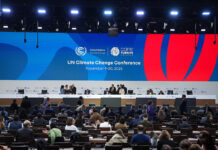
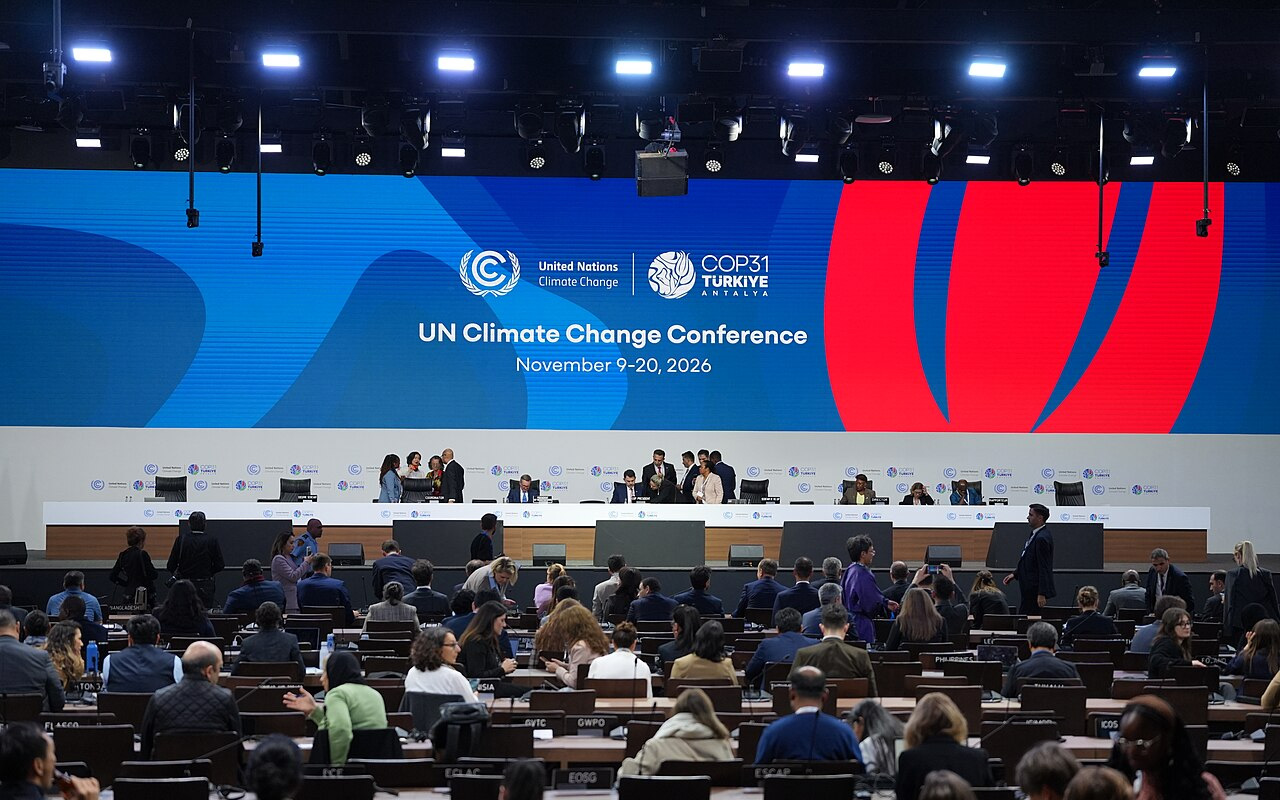
The United Nations COP31 climate summit in Antalya, Türkiye, has ended without an overarching political agreement after countries failed to reach consensus on fossil fuels, climate finance and the pace of global decarbonisation. Negotiations concluded on Sunday 22 November 2026, nearly two days after the scheduled finish, making COP31 the longest-running UN climate conference on record.
The European Union, UK and several other countries rejected the proposed final agreement, known as the Antalya Pact, arguing that it failed to confront the fossil fuels driving climate change. However, the summit was not without progress. Governments adopted separate decisions covering climate adaptation and a just transition, while businesses, investors and cities announced or highlighted new clean energy initiatives.
The contrasting outcomes raise an important question for responsible businesses. How can organisations deliver credible climate commitments and measurable environmental progress when international political consensus remains so difficult to achieve?
FOSSIL FUEL DISAGREEMENTS DERAIL CLIMATE DEAL
The central disagreement concerned whether the final COP31 agreement should explicitly reaffirm the need to transition away from fossil fuels. The proposed Antalya Pact acknowledged the likelihood of global temperatures exceeding the Paris Agreement’s 1.5°C threshold and called for accelerated climate action. However, the final text did not explicitly mention coal, oil, gas or the transition away from fossil fuels.
The omission prompted objections from the EU, UK, Panama, Vanuatu, the Marshall Islands and other countries. Darragh O’Brien, Ireland’s Minister for Climate, Energy and the Environment, speaking for the EU, argued that an agreement on climate action could not ignore the principal sources of greenhouse gas emissions.
Several fossil-fuel-producing countries opposed stronger language on reducing reliance on coal, oil and gas. Other disputes concerned the role of carbon capture, utilisation and storage technologies, particularly whether greater reliance on these approaches could delay direct emissions reductions.
The disagreement exposed divisions over how quickly economies should transition away from fossil fuels and how the financial and social consequences should be managed. It also highlighted the continuing gap between political commitments and the policies required to deliver them.
UN CLIMATE CHIEF WARNS OF LOST TIME
Just three days before negotiations collapsed, Simon Stiell, Executive Secretary of UN Climate Change, warned that governments faced urgent and difficult decisions. Speaking at a COP31 Presidency press conference on 19 November, Stiell acknowledged the complexity of reaching agreement across the summit’s negotiating agenda. “These are crucial days ahead for climate cooperation. And we have no time to lose.”
His warning came just days before the talks broke down. At the closing plenary on 22 November, Stiell acknowledged widespread disappointment that governments had failed to agree on the proposed Presidency-led decisions. “The world cannot afford a repeat of this moment.” Stiell emphasised that the UN climate process must continue to follow scientific evidence and respond to worsening climate impacts. He also acknowledged the need to improve and modernise international negotiations, including through greater transparency, earlier consultation and stronger efforts to build consensus.
UN Secretary-General António Guterres separately expressed deep disappointment at the failure to reach an overarching outcome, while stressing that the scientific urgency of climate action remained unchanged. The failure to adopt the Antalya Pact does not invalidate the Paris Agreement or previous agreements, including the COP28 commitment to transition away from fossil fuels. However, it leaves governments without a new overarching political agreement setting out how collective climate action should be strengthened following COP31.
CLIMATE FINANCE REMAINS A MAJOR STICKING POINT
Disagreements over financial support for developing countries also contributed to the breakdown. The proposed agreement referred to tripling adaptation finance, but failed to establish a sufficiently clear baseline or delivery framework. Developing countries had pressed for stronger commitments to help them respond to the growing costs of floods, droughts, extreme heat and other climate-related impacts.
The African Group raised concerns about the lack of clarity on adaptation finance and implementation, while representatives of climate-vulnerable countries warned that inadequate support would leave communities increasingly exposed. The challenge extends beyond emissions reduction. Countries also need investment in climate-resilient infrastructure, affordable energy, agriculture and essential services.
As Fair Play Talks reported ahead of COP31, emerging and developing economies outside China received just 18% of global clean energy investment in 2025, despite accounting for nearly two-thirds of the world’s population. Africa faces a particularly significant challenge, with hundreds of millions of people still lacking electricity access. For businesses and investors, these inequalities matter.
Affordable finance, reliable infrastructure and stable policy frameworks are essential for developing renewable energy, expanding clean technology and building sustainable supply chains. Without sufficient investment, the transition risks widening existing economic and social inequalities rather than reducing them.
ELECTRIFICATION TARGET FAILS TO SECURE AGREEMENT
Another major proposal concerned accelerating the electrification of the global economy. The proposed Antalya Pact included a target for electricity to account for 35% of global final energy consumption by 2035. Electrification can help reduce emissions by replacing fossil-fuel-powered transport, heating and industrial processes with electric alternatives, particularly where the electricity comes from low-carbon sources.
However, the draft raised concerns about how additional electricity would be generated, the role of carbon capture technologies and the financial implications for developing countries. Because the overarching agreement was rejected, the proposed 35% target was not adopted as a negotiated COP31 commitment.
Yet business leaders and the summit’s Australian negotiations team continued to argue that electrification offered a practical pathway towards reducing fossil-fuel dependence. In an interview on 20 November, Chris Bowen, Australia’s Minister for Climate Change and Energy and COP31 President of Negotiations, stated: “Electrification is the key to transitioning away from fossil fuels.”
Bowen argued that expanding clean electricity, grids and electrified technologies could help economies reduce emissions while improving energy security. The negotiations ultimately demonstrated the difference between broad support for electrification and international agreement on how to implement it. Voluntary electrification initiatives launched or promoted during COP31 remain separate from the rejected political agreement.
BUSINESSES AND INVESTORS PUSH AHEAD WITH CLEAN ENERGY
Despite the negotiating deadlock, substantial activity continued outside the formal political discussions. On 19 November, UN Climate Change launched its COP31 Electrification Delivery Package, bringing together investment plans, infrastructure development and business commitments.
The initiative brought together actions involving more than 150 countries plus the EU, 37 cities and over 260 businesses with combined annual revenues exceeding US$4 trillion. Among the key developments:
- US$156 billion in annual investment plans. Members of the Utilities for Net Zero Alliance announced combined annual investment plans of at least US$156 billion across electricity grids, renewable energy and storage.
- 21,000 kilometres of new electricity infrastructure. Alliance members reported deploying more than 21,000 kilometres of electricity grids during 2025.
- £400 million in UK climate finance. The UK announced an initial contribution to the Climate Investment Funds’ AMPLIFi mechanism, which aims to mobilise up to £5 billion for clean power, grids, storage and electrification in developing economies.
- US$600 million Asia Electrification Fund. Octopus Energy launched a fund targeting US$600 million in investment, with US$50 million in initial backing from Japanese investors.
- More than 185 businesses backing faster electrification. Companies with combined annual revenues of US$1.73 trillion supported the We Mean Business Coalition’s Seizing the Electric Advantage initiative.
These figures represent a mixture of existing activity, investment plans, fundraising targets and newly announced initiatives. They should not be interpreted as a single pool of newly committed funding. Nevertheless, the package demonstrates continuing business and investor interest in developing the infrastructure required for the energy transition.
María Mendiluce, CEO of the We Mean Business Coalition, emphasised that companies were increasingly recognising the commercial opportunities associated with electrification. She highlighted the importance of clearer government policies, investment incentives and infrastructure development to help businesses accelerate progress.
This momentum also reflects wider corporate sustainability trends. Fair Play Talks recently reported that nine in 10 sustainability professionals expect their organisations’ sustainability ambitions to remain stable or increase, despite mounting political, economic and regulatory pressures. The findings suggest that many organisations continue to regard sustainability as a strategic business priority, even when government policy becomes less predictable.
JUST TRANSITION MAKES PROGRESS, BUT KEY DECISIONS REMAIN
Although governments failed to agree on the overarching Antalya Pact, they adopted separate decisions, including measures relating to a just transition. A just transition recognises that the shift towards a low-carbon economy must consider the consequences for workers, communities and livelihoods.
At COP31, countries agreed to extend the existing Just Transition Work Programme for another three years, with improvements intended to make its discussions more inclusive and practical. However, disagreements over the governance, functions and operational arrangements of the Just Transition Mechanism established at COP30 meant that key decisions were postponed until COP32 in 2027.
Governments agreed to continue working together on a just transition, but key questions remain about how support will be delivered. In his closing remarks, Stiell stressed the importance of placing people at the centre of climate action: “Fairness and inclusion in the climate fight is absolutely essential.”
For businesses, this reinforces why climate strategies cannot focus exclusively on emissions. Industries dependent on fossil fuels may experience significant restructuring, while renewable energy, electrical infrastructure and emerging low-carbon technologies create demand for new skills.
Workers may require retraining, career development and support to move between sectors. Communities dependent on carbon-intensive industries may need targeted investment and long-term economic development strategies.
The social consequences of climate change also extend to employees already experiencing its effects. As Fair Play Talks previously highlighted in its coverage of extreme heat and workplace safety, employers increasingly need to consider climate risks within occupational health, employee wellbeing and business continuity planning. A credible just transition therefore needs to connect environmental goals with decent work, workforce development, inclusion and community resilience.
CLIMATE CAMPAIGNERS CRITICISE LACK OF POLITICAL PROGRESS
The outcome prompted criticism from environmental organisations and climate policy experts. Ani Dasgupta, President and CEO of the World Resources Institute, criticised the failure to reach agreement, arguing that governments had fallen short of their responsibilities. In the organisation’s official COP31 outcome statement, Dasgupta described the result as a failure of political leadership rather than a failure of the Paris Agreement.
He warned that governments had failed to provide vulnerable countries with sufficient clarity on future climate finance, while progress on the global energy transition continued outside international negotiations. The outcome follows mounting calls for greater accountability from governments and major polluters.
Ahead of the summit, international climate organisation 350.org was demanding credible fossil-fuel transition plans, stronger climate finance and greater protection for vulnerable communities. Campaigners urged governments to establish clear implementation timelines and ensure that major polluters contribute more towards the costs of addressing climate change.
The failure to secure an overarching agreement leaves many of these demands unresolved. It also reinforces the wider challenge of ensuring that clean energy investment delivers measurable environmental benefits while protecting communities affected by economic change.
WHAT DOES COP31’S FAILURE MEAN FOR BUSINESSES?
The absence of a new international political agreement does not remove existing corporate obligations or invalidate environmental commitments. However, it may create additional uncertainty for organisations planning long-term investment in decarbonisation. Businesses operating internationally must navigate different national climate policies, regulatory requirements, energy markets and infrastructure conditions. Without clearer international direction, decisions about investment, supply chains, emissions reduction and future energy needs can become more complicated.
Yet political uncertainty does not remove the need for corporate accountability. As Fair Play Talks previously reported, 84% of S&P 500 companies have climate targets, but many are struggling to achieve meaningful emissions reductions. The research found that 62% of companies with Scope 3 targets had recorded flat or rising value-chain emissions since 2021. Separate research has revealed that greenwashing incidents had more than doubled over five years, with scrutiny increasingly extending to financial institutions, renewable energy providers and businesses involved in low-carbon technologies.
These findings underline a central challenge for corporate climate leadership: making environmental commitments is becoming increasingly common, but demonstrating measurable progress remains considerably harder. The relationship between sustainability and business resilience is also strengthening.
Previous research found that six in 10 global chief sustainability officers expect sustainability progress to hold steady or accelerate, with climate adaptation increasingly recognised as an investment, asset-protection and business-continuity priority. For organisations, the lesson from COP31 is that environmental performance must be embedded in commercial strategy rather than depending entirely on the direction of international negotiations.
FIVE PRIORITIES FOR RESPONSIBLE BUSINESSES AFTER COP31
The summit’s outcome highlights five priorities for organisations seeking to maintain credible climate strategies.
- Maintain credible emissions targets. Companies should continue measuring and reducing emissions across their operations and supply chains, rather than using the absence of a new COP agreement to justify delays.
- Accelerate practical decarbonisation. Businesses can improve energy efficiency, electrify transport and industrial processes, and invest in clean energy infrastructure where commercially and technically feasible.
- Support a just transition. Climate strategies should include workforce development, retraining, employee engagement and support for communities affected by economic change.
- Strengthen supplier accountability. Organisations need reliable information about environmental impacts throughout their value chains, alongside clear expectations and practical support for suppliers.
- Improve transparency and evidence. Sustainability claims should be supported by independently credible information, measurable outcomes and honest explanations of progress, challenges or delays.
Taken together, these measures can help organisations reduce climate risks while strengthening resilience, accountability and long-term competitiveness.
COP31’S COLLAPSE LEAVES CLIMATE LEADERSHIP AT A CROSSROADS
COP31 ended without an overarching agreement, exposing deep divisions over fossil fuels, climate finance and the pace of global decarbonisation. Yet the summit also demonstrated that climate investment and practical action are continuing through businesses, cities, investors and voluntary partnerships. Governments extended the Just Transition Work Programme and adopted separate adaptation-related decisions, even as significant questions about implementation and finance remain unresolved.
The immediate challenge is translating existing commitments and investment plans into measurable emissions reductions, stronger climate resilience and fairer outcomes for vulnerable communities. For responsible businesses, the result is a reminder that long-term sustainability cannot depend entirely on international political agreements. The real test of corporate climate leadership is not simply what companies promise when governments agree, but what they deliver when political consensus proves difficult.
RELATED ARTICLES
Nearly two-thirds of chief sustainability officers expect global sustainability progress to hold steady or accelerate over the next 12 months, despite significant geopolitical uncertainty.
Greenwashing exposure is spreading beyond traditional polluters to the financial institutions, suppliers and technologies financing and driving the low-carbon transition, reveals new research.
A new report reveals 84% of S&P 500 companies have climate targets, but most are failing to reduce emissions. Here’s what employers need to know.
As world leaders prepare for COP31 in Türkiye, climate campaigners are demanding a credible plan to phase out fossil fuels, accelerate renewable energy and ensure major polluters contribute to the costs of the climate crisis.